

Household emergency preparedness can sound like a much bigger undertaking than it really is.
You do not need a bunker, years of stored food, expensive survival equipment, or detailed plans for every disaster imaginable. For most households, preparedness begins with something much more practical: being able to cope safely when normal everyday services are disrupted.
A severe storm can knock out electricity. A water-supply problem can make tap water temporarily unsafe. Flooding, wildfire, or another local hazard may require a household to leave home quickly. Even a relatively ordinary power outage can become difficult when it lasts longer than expected.
Preparedness is not about predicting which emergency will happen next. It is to make sure your household has thought through the essentials before you need them.
Household emergency preparedness means planning in advance for disruptions that could affect your family’s safety, food, water, power, communications, or ability to remain at home. A good starting point is to understand the risks relevant to where you live, make a household emergency plan, store essential food and water, and make sure everyone knows what to do if normal routines are disrupted.
Official preparedness guidance follows much the same principle: understand the risks you may face, make a plan, and assemble supplies appropriate to your household. Ready.gov
The important word here is household. A useful plan should reflect the people who actually live in your home—their ages, health requirements, pets, transportation, location, climate, and other individual circumstances.
Let’s build that preparedness step by step.
What Should Your Household Prepare For?
A common mistake is to begin preparedness by imagining the most extreme emergency possible.
A better starting point is to ask:
What events are reasonably likely to disrupt everyday life where we live?
The answer will be different from one household to another.
Depending on your location, relevant risks might include hurricanes, tornadoes, winter storms, extreme heat, wildfire, earthquakes, or flooding. But emergencies do not have to be major natural disasters. Your preparations can also help during more ordinary disruptions such as:
- an extended electricity outage;
- interruption of the water supply;
- unsafe drinking water;
- inability to reach stores for several days;
- temporary shortages of important supplies;
- disruption of mobile or internet service;
- an evacuation order; or
- loss of heating or cooling during extreme weather.
Your household circumstances matter as much as geography.
A family relying on electrically powered medical equipment, for example, has different priorities from a healthy couple living in the same neighborhood. Parents of an infant need supplies that another household may never use. Pet owners have additional responsibilities. Someone without a car needs a different evacuation plan from someone with reliable transportation.
The goal, therefore, isn’t to prepare equally for every imaginable emergency.
Identify your household’s most important vulnerabilities first and work outward from there.
Step 1: Make a Family Emergency Plan
Buying emergency supplies is useful, but supplies alone don’t make up a preparedness plan.
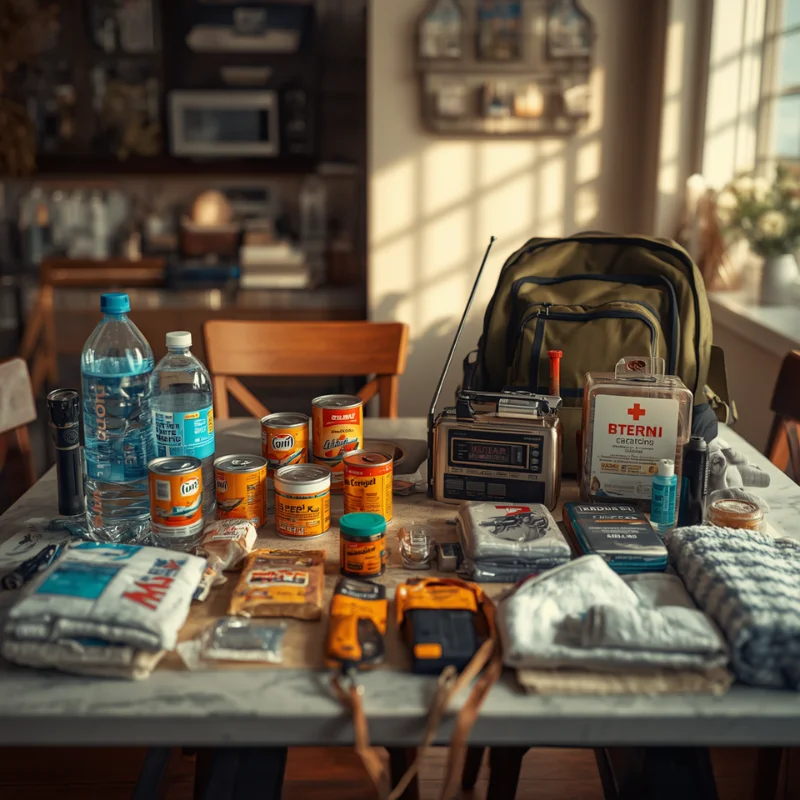
Imagine that a severe storm causes widespread power and mobile-network disruption while family members are at different locations. Where will everyone go? Who collects the children? How will you contact one another? What happens if you cannot return home?
Those decisions are considerably easier to make around a table today than during an emergency.
Your household emergency plan doesn’t need to be complicated. It should answer several basic questions.
Decide how you will communicate
Make sure household members have important telephone numbers available somewhere other than only in a mobile phone’s contact list.
Consider maintaining a written or printed emergency contact list that includes:
- household members;
- an out-of-area contact;
- schools or childcare providers;
- doctors and other essential healthcare contacts;
- important neighbors or relatives;
- local emergency-management information where appropriate.
Discuss what family members should do if normal calls or internet-based communication are unavailable or unreliable.
Children old enough should know whom to contact and what to do if they cannot reach a parent immediately.
Choose meeting places
Select at least one familiar meeting location close to home.
It can also be sensible to identify another location outside your immediate neighborhood in case you can’t return home.
The purpose isn’t to create an elaborate evacuation strategy. It is simply to remove one important uncertainty:
If we become separated and cannot communicate normally, where should we try to meet?
Think through evacuation
Consider how everyone would leave if authorities advised or ordered evacuation.
Ask practical questions:
Where would you go?
Which routes could you use?
Does everyone have transportation?
Who would help an older or disabled family member?
What would you do with pets?
Which essential medications, documents, and supplies should you take with you?
A detailed evacuation guide deserves its own article, but these basic decisions belong in the household plan from the beginning.
Assign simple responsibilities
Preparedness works better when no one assumes someone else will handle everything.
Depending on the household, responsibilities might include:
- collecting medications;
- taking the emergency kit;
- gathering important documents;
- helping children;
- securing pets; or
- checking on a household member who needs assistance.
These responsibilities should remain flexible—an emergency rarely follows a script—but discussing them beforehand can prevent unnecessary confusion.
Build the plan around your household
Generic preparedness checklists are useful starting points, but your actual plan needs to accommodate real people.
Consider whether anyone in the household has:
- prescription medication requirements;
- mobility or accessibility needs;
- electrically powered medical equipment;
- dietary restrictions;
- hearing or vision needs;
- limited ability to communicate independently;
- special needs related to age or health.
Also account for babies, young children, and pets.
Ready.gov emphasizes tailoring emergency plans and supply kits to individual daily needs rather than assuming one standard kit works for everyone. Ready.gov
Practical takeaway: Don’t try to produce the perfect emergency plan in one sitting. Create a simple first version, share it with household members, and improve it as you identify gaps.
Extended power outages can disrupt lighting, refrigeration, communication, and home heating or cooling. Our guide on How to prepare for a power outage at home explains the essential supplies, safety precautions, and practical steps every household should consider.
Step 2: Build an Emergency Water Supply
If you make only a few preparedness improvements initially, water should be near the top of the list.
People often think of emergency food first, but a disruption to safe drinking water can become a serious problem much more quickly.
Current CDC guidance recommends storing at least 1 gallon (about 3.8 liters) of water per person per day for at least three days. That water is intended for drinking as well as needs such as cooking and brushing teeth. The CDC also recommends storing more when practical. CDC
That gives us a simple starting calculation:
Number of people × 1 gallon × 3 days = basic emergency water supply
For example:
4 people × 1 gallon × 3 days = 12 gallons
That is a minimum preparedness baseline, not necessarily the ideal amount for every household.
When might you need more water?
Water needs can increase because of:
- hot weather;
- pregnancy or breastfeeding;
- illness;
- individual medical circumstances;
- pets; and
- a disruption lasting longer than three days.
In some circumstances, CDC emergency guidance recommends trying to maintain as much as a two-week supply where feasible. CDC
You don’t need to let that larger target discourage you. If storing two weeks of water isn’t practical because of space, cost, or physical handling, establish the three-day baseline first and expand gradually.
What water should you store?
The CDC identifies unopened commercially bottled water as the safest and most reliable emergency water source. CDC
Households can also store tap water in suitable containers, but the containers, cleaning method, storage conditions, and replacement schedule matter.
Whatever method you choose, keep the supply somewhere reasonably cool and protected from contamination and substances that could affect the containers.
Avoid treating a nearby swimming pool, pond, stream, rain barrel, or other uncertain source as automatically safe drinking water.
During an actual drinking-water emergency, follow instructions issued by the relevant local authorities.
What if your tap water becomes unsafe?
A water emergency does not necessarily mean the water looks dirty.
Contamination can occur without an obvious change in appearance, taste, or smell. If public-health authorities issue a drinking-water advisory, follow their instructions about whether the water needs to be boiled, treated, or avoided.
CDC guidance advises using safe bottled, boiled, or appropriately treated water when the normal supply is known or suspected to be unsafe. CDC
Also remember that boiling or ordinary household treatment can’t remove every contaminant. For example, CDC warns that water contaminated with fuels or toxic chemicals cannot be made safe through normal disinfection treatment. CDC
This is why stored safe water is valuable even if you have other potential water sources nearby.
Start small if necessary
For a beginner, the practical sequence is:
First: establish three days of safe drinking water.
Next: account for household-specific needs and pets.
Then: gradually extend the supply if storage space and circumstances permit.
That is far more useful than postponing water preparedness because an ideal two-week supply feels overwhelming.
Coming soon: How Much Emergency Water Should You Store?
Step 3: Build a Practical Emergency Food Supply
Emergency food storage doesn’t have to mean buying buckets of specialist survival meals.
For most households, a better approach is to begin with ordinary shelf-stable foods that you already know how to use.
A practical emergency food supply should be:
- safe to store;
- reasonably nutritious;
- familiar to the household;
- simple to prepare;
- usable with little or no cooking where possible; and
- suitable for any dietary or medical requirements in the household.
CDC emergency-supply guidance includes nonperishable, easy-to-prepare foods among basic household emergency supplies. CDC
Start with food you already eat
Look through your pantry before buying anything.
You may already have useful emergency foods such as:
- canned beans;
- canned vegetables and fruit;
- canned fish or meat;
- nut or seed butters;
- crackers;
- cereals;
- shelf-stable milk;
- dried fruit;
- nuts;
- energy or protein bars; and
- other shelf-stable foods your household regularly consumes.
The exact selection matters less than whether it works for your household.
Someone managing diabetes, food allergies, kidney disease, swallowing difficulties, or another health-related dietary requirement may need a very different supply. Families with infants also need to plan specifically for infant feeding rather than assuming ordinary emergency foods will be sufficient.
And don’t overlook pets.
Store what you eat—and eat what you store
One of the simplest ways to avoid waste is to make emergency food part of your normal pantry system.
Instead of buying unfamiliar foods and leaving them untouched for years, rotate suitable shelf-stable foods through normal meals.
Use older items first, and put new replacements into storage.
This approach has several advantages:
- less food expires unused;
- the household is familiar with what has been stored;
- you learn how much you actually consume; and
- replenishing the supply becomes part of ordinary grocery shopping.
It also allows preparedness to develop gradually rather than through one large purchase.
Think about cooking before you need to
A pantry full of food isn’t particularly helpful if almost everything requires equipment you cannot use during a power outage.
Include at least some foods you can eat without cooking or with minimal preparation.
If canned foods form part of the supply, keep a manual can opener available. It is an inexpensive item that is surprisingly easy to overlook; official emergency-kit guidance specifically includes one. CDC
Also consider how you would prepare food safely if normal cooking appliances were unavailable. Use any alternative cooking method according to its safety instructions, particularly regarding fire and carbon-monoxide risks.
We will address those options separately, rather than casually recommending indoor use of equipment intended for outdoor use.
Remember that refrigerated food is temporary emergency food
When electricity fails, the food already in your refrigerator and freezer may still be usable—but only within safe limits.
Current CDC guidance says that, if doors remain closed, food generally remains safe for up to:
- 4 hours in a refrigerator;
- 48 hours in a full freezer;
- 24 hours in a half-full freezer. CDC
Keep the doors closed as much as possible during an outage.
After the safe period has passed, don’t judge questionable perishable food by smell or taste alone. CDC advises discarding unsafe perishables and specifically warns never to taste food to determine whether it is safe. CDC
This is another reason a shelf-stable emergency pantry matters: you don’t want your household’s entire food plan to depend on refrigeration.
How much emergency food should you store?
For a beginner, several days of usable food is a sensible first milestone. Official emergency guidance commonly uses at least a several-day supply as a preparedness baseline. CDC
But don’t turn the number into a competition.
A household with no emergency food becomes better prepared when it builds three days’ worth. A household with three days can gradually work toward seven. From there, you can decide whether a larger rotating pantry makes sense for your circumstances.
The aim is resilience—not accumulating food for its own sake.
A simple rule to remember
Store food your household will actually eat, make sure some of it works without electricity, rotate it through normal use, and expand the supply gradually.
That philosophy is both more affordable and more sustainable than buying an enormous emergency-food package before you understand what your household actually needs.
Coming soon on Resilient Home Life: How to Build a 7-Day Emergency Food Supply.
Step 4: Assemble Essential Emergency Supplies
Once you have a basic plan and have started building emergency food and water supplies, the next step is to gather the other essentials your household may need during a disruption.
This is where preparedness can easily become unnecessarily expensive.
If you search online for an “ultimate emergency kit,” you may encounter enormous lists of specialized equipment. Some of those items can be useful, but a beginner doesn’t need to buy everything at once.
A better approach is to organize supplies according to the problems they help you solve.
Ready.gov recommends basic supplies such as several days of water and non-perishable food, a flashlight, radio, batteries, first-aid supplies, sanitation items, a manual can opener, local maps, and charging options. It also emphasizes adapting a kit to the particular needs of household members and pets. Ready.gov
Water and Food
The water and food supplies discussed earlier form the foundation.
At minimum, think about:
- safe drinking water;
- shelf-stable food;
- food requiring little or no cooking;
- a manual can opener if you store canned food;
- household dietary requirements;
- infant supplies where relevant; and
- food and water for pets.
Don’t regard this as a kit you build once and forget. Food and water need periodic inspection and rotation.
Lighting
A power outage becomes considerably easier to manage when everyone can move around the home safely.
Useful options include:
- flashlights;
- headlamps;
- battery-powered lanterns; and
- spare batteries in the sizes your equipment requires.
A headlamp can be especially practical because it leaves both hands free.
Battery-powered lighting is generally preferable to relying on candles. CDC recommends flashlights or other battery-operated lights when possible because candles increase a fire risk. CDC
Communications and Information
Your smartphone may remain extremely useful during an emergency—but don’t make it your only source of information.
Consider keeping:
- charged power banks;
- appropriate charging cables;
- a vehicle charger;
- a battery-powered or hand-crank radio; and
- a written list of important telephone numbers.
A radio that can receive local emergency information can remain useful when internet or mobile services are disrupted.
Ready.gov includes battery-powered or hand-crank radio equipment and backup phone charging among its recommended emergency supplies. Ready.gov
First Aid and Health
Every household should have an appropriately stocked first-aid kit and know where it is kept.
But health preparedness goes beyond bandages.
Consider the everyday items household members depend upon, including:
- prescription medications;
- necessary over-the-counter medicines;
- eyeglasses or contact-lens supplies;
- hearing-aid batteries;
- medical information;
- mobility aids; and
- backup arrangements for essential medical equipment.
The question to ask is simple:
What health-related item would create a serious problem if we suddenly couldn’t obtain it?
That answer belongs near the top of your preparedness priorities.
Hygiene and Sanitation
An interruption to water, electricity, or waste services can quickly make ordinary hygiene more difficult.
Depending on your household, useful supplies might include:
- soap;
- hand sanitizer;
- toilet paper;
- moist wipes;
- garbage bags;
- feminine hygiene products;
- diapers and infant supplies; and
- other personal hygiene essentials.
Ready.gov specifically includes sanitation supplies such as moist towelettes, garbage bags, and plastic ties in its basic emergency-kit guidance. Ready.gov
Clothing and Warmth
Your needs will depend heavily on climate and season.
Think about:
- appropriate spare clothing;
- sturdy footwear;
- blankets;
- warm layers; and
- rain protection where relevant.
Preparedness should change with the seasons. A kit assembled for summer may not adequately protect a household during a winter outage.
Tools and Practical Items
A few simple tools can solve surprisingly large problems.
Depending on your circumstances, consider:
- a multipurpose tool or basic household tools;
- whistle;
- manual can opener;
- local maps;
- work gloves;
- spare batteries; and
- any tools needed for household-specific emergency procedures.
You do not need an elaborate collection of “survival tools.” Start with equipment you understand and are likely to use.
Documents and Money
Keep essential information accessible even if electricity or internet access is unavailable.
We will discuss document protection later in this guide, but your preparedness supplies should account for identification, emergency contacts, insurance information, medical information and other important records.
A modest amount of accessible emergency cash may also be useful if electronic payment systems are temporarily unavailable.
Build Your Supplies in Stages
If assembling all of this sounds expensive, don’t do it all at once.
Start with the gaps that matter most.
For example:
First priority: water, food, medications, lighting, and first aid.
Second priority: communications, charging, sanitation and household-specific supplies.
Third priority: additional backup equipment and items that improve comfort or extend how long your household can manage independently.
Many households already own a surprising proportion of what they need. The first task may simply be gathering those items, checking that they work, and storing them somewhere accessible.
A useful emergency kit is not the kit with the most equipment. It is the one containing the things your household is most likely to need—and knows how to use.
Coming soon on Resilient Home Life: Home Emergency Supplies Checklist.
Step 5: Prepare for Power Outages
Power outages are a useful example of why practical preparedness matters.

A short outage may be little more than an inconvenience. A prolonged outage can affect lighting, communications, refrigeration, heating or cooling, cooking, water systems, and medical equipment.
Instead of treating a blackout as one problem, consider the individual services electricity normally provides.
Prepare Emergency Lighting
Know where your flashlights and other emergency lights are kept.
Check them periodically and keep the right batteries on hand.
Ideally, household members should be able to reach a light without walking through a dark home looking for one.
As noted above, battery-operated lighting is generally a safer first choice than candles. CDC
Keep Essential Devices Charged
Power banks can provide valuable additional phone life during an outage.
Keep them charged rather than storing them empty for months.
Vehicle chargers can provide another option when circumstances make their use appropriate. A battery or hand-crank radio also gives you an information source that does not depend entirely on a smartphone.
CDC’s preparedness guidance specifically recommends planning for backup charging, emergency lighting, and alternative power for personal devices and necessary equipment. CDC
Protect Refrigerated and Frozen Food
When the power fails, resist the temptation to repeatedly open the refrigerator to check what is inside.
As discussed earlier, CDC guidance says an unopened refrigerator generally keeps food safe for around 4 hours, while a full unopened freezer can maintain safe temperatures for approximately 48 hours—about 24 hours when half full. CDC
An appliance thermometer can help you assess temperatures more reliably, and CDC includes refrigerator/freezer thermometers in its power-outage preparedness checklist. CDC
Your shelf-stable emergency food supply becomes particularly valuable when you can no longer rely on refrigerated food.
Plan for Heating and Cooling
Loss of electricity can become dangerous during extreme heat or cold.
Your plan should consider:
- appropriate clothing and blankets in cold weather;
- safe alternative heating arrangements where applicable;
- hydration and ways to remain cool during extreme heat; and
- somewhere else you can go if your home becomes unsafe.
CDC advises seeking another safe location or community shelter if indoor conditions become dangerously hot or cold. It also warns against using a gas range or oven to heat a home. CDC
Plan for Medical Equipment Before an Outage
For households dependent on electrically powered medical devices, power preparedness is not merely a matter of convenience.
Discuss backup-power requirements with the appropriate equipment provider or healthcare professional before an emergency.
Consider:
- how long backup batteries operate;
- how they will be recharged;
- whether alternative equipment is available;
- whether medication requires refrigeration; and
- where you could relocate if a prolonged power outage makes staying home unsafe.
CDC specifically highlights the potentially serious consequences of outages for people dependent on home medical devices and recommends planning backup power in advance. CDC
Generator Safety: One Rule You Must Not Compromise
Portable generators can provide useful backup electricity, but incorrect use can be deadly because combustion produces carbon monoxide (CO).
Carbon monoxide cannot be seen or smelled.
CDC’s current guidance is explicit:
Operate portable generators outdoors, more than 20 feet from windows, doors and vents. Never operate one inside a home or garage, even with doors or windows open. CDC
A battery-powered or battery-backup carbon monoxide detector in the home when operating a generator. CDC
The same general danger applies to improvised indoor use of other fuel-burning equipment.
Never use a charcoal grill or portable gas camping stove indoors. Never use a gas oven as an improvised home heater. CDC
This is one area where convenience should never override safety.
Treat Downed Power Lines as Dangerous
After storms or other damage, stay away from fallen electrical lines and anything they may be touching.
Don’t assume a line is harmless just because the neighborhood appears to have lost electricity.
Follow instructions from utilities and local emergency authorities.
A Better Way to Think About Blackout Preparedness
Instead of asking:
“Do I need a generator?”
start by asking:
“What functions would my household lose during a power outage, and which of them are essential?”
For one household, charging phones and maintaining lighting may be sufficient.
For another, refrigeration of medication or operation of medical equipment may make substantial backup power essential.
That needs-based approach prevents you from buying expensive equipment before understanding the problem you’re actually trying to solve.
Coming soon on Resilient Home Life: What to Do During a Power Outage.
Step 6: Prepare to Evacuate
Much household preparedness naturally focuses on staying safely at home.
But some emergencies require exactly the opposite.
Wildfires, flooding, hurricanes, hazardous-material incidents, and other events can make evacuation necessary—sometimes with little notice.
A resilient household should therefore be prepared for both sheltering at home and leaving home.
Know Where You Could Go
Don’t wait for an evacuation order before considering possible destinations.
Depending on the emergency, options might include:
- relatives or friends outside the affected area;
- hotels or other accommodation;
- community shelters; or
- destinations identified by local authorities.
Different emergencies may require different routes or destinations, so don’t rely on a single fixed plan.
Know How You Will Get There
Consider your household’s transportation realistically.
Ask:
- Do you normally have access to a vehicle?
- Who will drive?
- What happens if the household is separated?
- Does anyone require accessible transportation?
- How will pets travel?
- What alternatives exist if your usual transportation is unavailable?
If your household does not have reliable private transportation, investigate local emergency arrangements before you need them.
Prepare a Portable Go-Bag
Your home emergency supplies and evacuation supplies don’t have to be identical.

A home supply can be relatively large. An evacuation kit needs to be portable.
Ready.gov preparedness materials recommend keeping a smaller, lightweight version of essential supplies you can take when leaving home. Ready.gov
A practical go-bag might include:
- water;
- ready-to-eat food;
- necessary medications;
- basic first aid;
- flashlight;
- phone charger or power bank;
- copies of important information;
- basic hygiene supplies;
- weather-appropriate clothing;
- essential infant or accessibility items; and
- necessary pet supplies.
The exact contents should reflect your household rather than an internet checklist.
Keep Important Documents Accessible
An evacuation is not the time to search through drawers for identification, insurance information, or medical records.
Prepare important information in advance.
Depending on your circumstances, this might include copies of:
- identification;
- insurance policies;
- prescriptions and essential medical information;
- emergency contacts;
- property information; and
- relevant financial records.
Ready.gov evacuation materials also recommend including key identification, insurance, medical, and contact information among portable emergency records. Ready.gov
Keep sensitive documents securely rather than leaving them exposed in an easily accessible bag.
Include Pets in the Evacuation Plan
Pets should be part of the plan from the beginning, not an afterthought.
Think about:
- carriers or leashes;
- pet food and water;
- medications;
- veterinary records;
- identification;
- possible pet-friendly destinations.
FEMA preparedness material recommends identifying possible pet-friendly accommodation in advance and maintaining a portable pet supply kit containing essentials such as food, water, medication, and veterinary information. Ready.gov
Don’t Wait Until the Last Moment to Prepare
Some evacuation tasks can be completed long before an emergency:
Keep the vehicle reasonably fueled or charged.
Know where medications are.
Keep important contact information accessible.
Know where pet carriers are stored.
Maintain your go-bag.
Know more than one route out of the area where practical.
The purpose is not to live with a packed suitcase by the door. It is to avoid turning easily preventable tasks into last-minute emergencies.
Follow Official Evacuation Instructions
Preparedness should make it easier to leave safely when authorities tell you to leave.
It should never create false confidence that stored supplies or equipment make it safe to remain in a location subject to an evacuation order.
Conditions can change rapidly, and emergency authorities may have information about fire, flooding, infrastructure damage, or other hazards that individual households do not.
If officials direct your area to evacuate, follow the applicable instructions.
The purpose of an evacuation plan isn’t to predict exactly when you’ll need it. It’s to reduce the number of decisions you have to make under pressure.
Coming soon on Resilient Home Life: How to Prepare for an Emergency Evacuation.
Step 7: Protect Important Documents and Financial Information
Emergency preparedness is not only about physical supplies. A household may also need access to identification, insurance information, medical records, and financial details when normal routines are disrupted.
Imagine having to leave home quickly after a flood, wildfire, or other emergency. Replacing damaged property or arranging temporary accommodation can become more difficult if essential records are inaccessible.
Start by identifying the documents your household would find difficult to manage without.
These may include:
- identification documents;
- insurance policies and contact details;
- property or tenancy records;
- prescription and essential medical information;
- emergency contacts;
- vehicle information; and
- important financial account contact information.
You do not necessarily need to carry originals of every document in an evacuation bag. Consider keeping appropriately protected copies of essential information and secure digital backups where suitable.
Protect sensitive information from theft or unauthorized access.
Keep Some Payment Flexibility
An extended outage can temporarily affect ATMs, card terminals, banking access or electronic payment systems.
Keeping a modest amount of emergency cash in a secure location can provide another payment option during a disruption. The appropriate amount depends on your household and circumstances; there is no universal figure everyone needs to keep.
The broader principle is diversification: don’t make your household completely dependent on one payment method during an emergency.
Step 8: Plan for the People—and Animals—Who Actually Live in Your Home
A generic emergency checklist can never fully prepare a real household.
Your plan needs to reflect the people who will depend on it.
Children
Consider children’s:
- food and water needs;
- medications;
- clothing;
- comfort items;
- school or childcare arrangements; and
- ability to understand the household emergency plan.
Explain preparedness in an age-appropriate way. Children should know essential actions without being unnecessarily frightened by disaster scenarios.
Older Adults
Older household members may need additional consideration for:
- medications;
- mobility;
- hearing or vision;
- transportation;
- medical devices;
- temperature sensitivity; and
- assistance during evacuation.
Avoid assuming that another family member will automatically be available to help. Decide in advance who can provide assistance and what alternatives exist.
Disabilities and Medical Needs
Anyone who depends on mobility equipment, refrigerated medication, electricity-powered medical devices, specialized communication methods, or regular medical treatment needs a more individualized plan.
Ready.gov recommends building preparedness around specific support, transportation, medical and communication requirements rather than relying solely on a standard emergency kit.
Discuss important medical contingencies with the relevant healthcare professional or equipment provider before an emergency occurs.
Pets
Pets need their own preparedness supplies.
Depending on the animal, these may include:
- food and water;
- medication;
- leash, harness or carrier;
- identification;
- sanitation supplies; and
- veterinary information.
Also determine where you could evacuate with your animals, since not every temporary accommodation accepts pets.
The best emergency plan is not the most comprehensive checklist on the internet. It is the plan designed around the actual needs of your household.
Step 9: Review and Maintain Your Preparedness Plan
Preparedness is not a one-time project.
Food expires. Batteries discharge. Children grow. Prescriptions change. People move. Telephone numbers change. Power banks that worked two years ago may no longer hold a useful charge.
Set aside time periodically to review your preparations.
Check:
- stored food and water;
- medications and expiration dates;
- flashlights and batteries;
- power banks;
- first-aid supplies;
- seasonal clothing;
- emergency contacts;
- important documents;
- children’s current needs;
- pet supplies; and
- evacuation arrangements.
You don’t need an elaborate inspection schedule. Linking the review to a recurring household event—such as the beginning of a new season—can make it easier to remember.
Practice the Plan
A plan that nobody remembers has limited value.
Occasionally discuss basic scenarios:
What would we do if the power disappeared tonight?
Where would we meet if we couldn’t return home?
Who takes the pet carrier?
Where is the emergency water?
How would we leave if our normal route were unavailable?
The exercise may reveal simple problems that are much easier to correct now than during an emergency.
A Simple 30-Day Household Preparedness Plan
If this guide feels like a lot to accomplish, don’t try to do everything this weekend.
Use the next month.
Week 1: Make the Plan
Identify the hazards most relevant to where you live.
Create or update:
- emergency contacts;
- household meeting locations;
- communication arrangements;
- evacuation options; and
- responsibilities for household members.
Pay particular attention to medications, children, older adults, disabilities, and pets.
Week 2: Establish Food and Water
Build at least your basic emergency water supply.
Review the pantry and begin assembling several days of shelf-stable foods your household already eats.
Don’t buy everything again if you already own suitable supplies—organize what you have first.
Week 3: Cover Essential Equipment
Check your:
- flashlights;
- batteries;
- power banks;
- first-aid kit;
- radio or information source;
- sanitation supplies; and
- essential household tools.
Fill the important gaps before buying optional equipment.
Week 4: Prepare to Leave—and Test the Plan
Organize essential documents and evacuation supplies.
Review transportation and possible destinations.
Then conduct a simple household preparedness check:
Can everyone find the emergency supplies?
Do the flashlights work?
Are the power banks charged?
Does everyone understand the communication plan?
Could you leave reasonably quickly if instructed?
After 30 days, you probably won’t be prepared for everything.
But you will be substantially better prepared than you were on Day 1.
Common Emergency Preparedness Mistakes
Buying Gear Before Making a Plan
Preparedness marketing can make equipment seem like the starting point.
It isn’t.
Understand your risks and household needs. Then buy equipment that solves identifiable problems.
Preparing for Extreme Events but Ignoring Ordinary Disruptions
A prolonged power outage, water advisory, or severe storm is far more useful to plan around than an elaborate scenario you may never encounter.
Good everyday preparedness also creates a foundation for coping with more serious events.
Forgetting Water
Food storage tends to receive more attention, but safe water is fundamental.
Establish your water supply early.
Storing Food Nobody Wants to Eat
An emergency is a poor time to discover that your family dislikes the food you stored.
Whenever practical:
Store what you eat, and eat what you store.
Depending Completely on Electricity
Think about what stops working during an outage—not only lights, but communications, refrigeration, cooking, heating or cooling, pumps, and medical equipment.
Ignoring Household-Specific Needs
A standard emergency kit cannot automatically account for medication, disabilities, infants, older adults, dietary requirements,ts or pets.
Customize it.
Never Reviewing Supplies
Preparedness equipment quietly deteriorates when you forget it in a closet.
Inspect it periodically.
Trying to Do Everything at Once
This may be the most discouraging mistake.
You don’t need to become completely prepared in a weekend.
Preparedness is a process, not a shopping trip.
Household Emergency Preparedness Checklist
Use this as a simple starting checklist.
☐ Identify the emergencies most relevant to your location
☐ Create a household communication plan
☐ Choose emergency meeting locations
☐ Record important contact information
☐ Store an appropriate emergency water supply
☐ Build several days of practical emergency food
☐ Assemble basic first-aid supplies
☐ Prepare flashlights and backup lighting
☐ Keep power banks and charging options ready
☐ Plan for an extended electricity outage
☐ Account for essential medications and medical equipment
☐ Prepare a portable evacuation kit
☐ Identify possible evacuation routes and destinations
☐ Protect important documents
☐ Include babies, children and older adults in the plan
☐ Account for disabilities and accessibility needs
☐ Prepare food, water, medication and transport for pets
☐ Review supplies periodically
☐ Practice the household plan
Frequently Asked Questions
How much water should I store for an emergency?
The CDC recommends storing at least one gallon of water per person per day for three days, and more when possible. Individual needs may be higher because of climate, health, pregnancy or other circumstances. Pets also need water.
How many days of emergency supplies should a household have?
A several-day supply is a practical starting point. Start with the essentials and gradually increase your resilience where storage, budget, and household circumstances permit. Local emergency guidance may recommend additional supplies based on the hazards in your area.
What should I buy first for emergency preparedness?
Start with necessities rather than specialized survival equipment: safe water, usable shelf-stable food, necessary medications, first aid, reliable lighting, communication/charging options and household-specific essentials. Check what you already own before buying more.
Do I need a go-bag if I plan to shelter at home?
It makes sense to keep portable essentials even if sheltering at home is your primary plan. Some emergencies require evacuation with little notice, and a lightweight go-bag can keep important medication, documents, water, food, and other necessities ready to leave with you.
How often should I check emergency supplies?
Review them periodically and whenever household circumstances change. Check food, water, medications, batteries, power banks, documents, seasonal clothing, and children’s or pets’ needs. A seasonal review is an easy routine for many households.
Start Small, Then Build Resilience
Household emergency preparedness doesn’t require preparing for every possible disaster.
Begin with the events most likely to disrupt life where you live. Make a simple family plan. Establish safe food and water supplies. Cover essential needs for lighting, communication, health, and power. Prepare to evacuate if necessary.
Then improve the system gradually.
A household that can comfortably manage three days of disruption can work toward greater resilience. Someone with a flashlight and a basic plan can add backup charging. A three-day pantry can become a seven-day pantry. Small improvements accumulate.
And that is ultimately what practical preparedness is about.
The goal isn’t to live in fear of disruption. It’s to make disruption less frightening when it happens.