

Fresh vegetables are nutritious, versatile, and useful for everyday cooking. But they can also spoil quickly, especially when you buy more than you need or harvest a large quantity from your garden.
Learning to preserve vegetables at home can reduce food waste, stretch your grocery budget, and keep seasonal produce available longer.
You do not need a large garden, expensive equipment, or years of experience to begin. Several preservation methods suit ordinary households, including freezing, dehydrating, and refrigerator pickling.
Other methods, particularly pressure canning, require specialized equipment and careful adherence to scientifically tested procedures.
In this beginner-friendly guide, we will explore four vegetable preservation methods, explain which vegetables work best with each, and highlight the most important safety precautions.
Quick Answer: What Is the Best Way to Preserve Vegetables at Home?
For most beginners, freezing is the simplest place to start. You can blanch, cool, pack, and freeze many vegetables with relatively little equipment.
Dehydrating is another useful option when you want lightweight, compact ingredients for future cooking.
Refrigerator pickling works well for vegetables such as cucumbers, carrots, and onions, but these pickles must remain refrigerated.
Pressure canning lets you safely store certain low-acid vegetables at room temperature when you use scientifically tested recipes and the right equipment.
The best method depends on the vegetable, your available storage space, and how you intend to use the preserved food.
1. Why Preserve Vegetables at Home?
Home vegetable preservation offers several practical advantages.
Reduce Food Waste
Vegetables sometimes spoil before you can use them, especially when you buy large quantities.
Preserving suitable vegetables while they are fresh can help reduce unnecessary waste.
Make Better Use of Garden Harvests
A productive vegetable garden may produce more food than your household can eat right away.
Preservation allows you to use some of that harvest later.
Save Money on Seasonal Produce
Certain vegetables become more affordable during their peak growing seasons.
Preserving them can help you take advantage of seasonal availability, but actual savings depend on energy costs, equipment, and fresh produce prices.
Build Practical Household Skills
Vegetable preservation is a useful self-sufficiency skill.
It encourages better food planning, safe storage habits, and more efficient use of household resources.
However, not every preserved vegetable is suitable for emergency storage. Frozen food depends on electricity, and refrigerator pickles require continuous refrigeration.
2. Four Methods of Preserving Vegetables at Home
| Method | Suitable examples | Main equipment | Storage |
|---|---|---|---|
| Freezing | Beans, broccoli, peas, carrots | Freezer, bags or containers | Frozen |
| Dehydrating | Carrots, peppers, onions, mushrooms | Food dehydrator | Cool, dry storage after proper drying |
| Refrigerator pickling | Cucumbers, carrots, onions | Jars, refrigerator | Refrigerated |
| Pressure canning | Green beans, carrots, potatoes | Pressure canner and approved jars | Shelf-stable if correctly processed |
Each method has different preparation requirements and safety considerations.
For beginners, it makes sense to master one method before buying equipment for another.
3. Method One: Freezing Vegetables
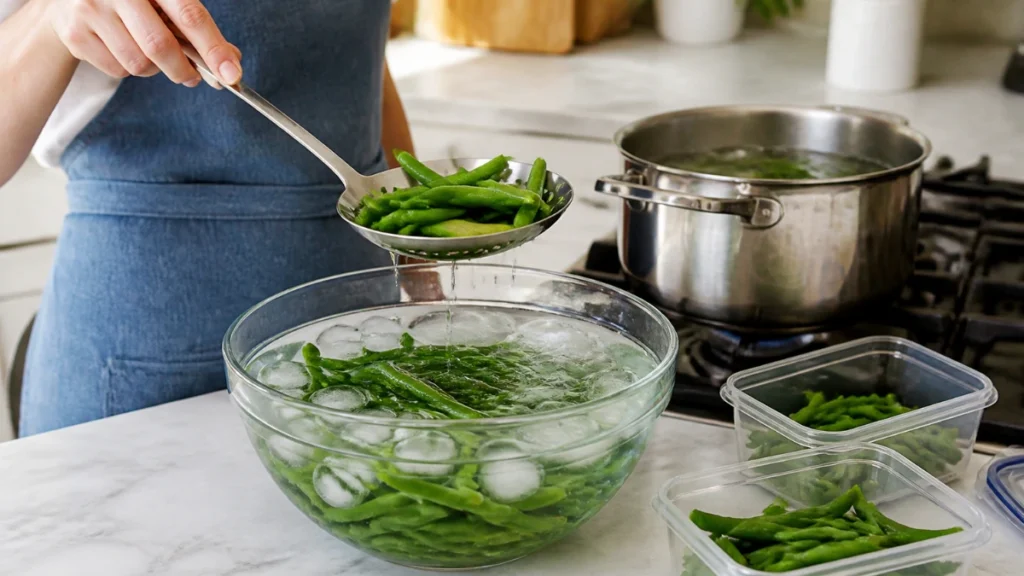
Freezing is one of the most accessible ways to preserve vegetables.
It slows microbial growth and helps maintain food quality when vegetables are properly prepared and stored.
Most households already own a refrigerator with a freezer compartment, making this method relatively inexpensive to try.
Vegetables That Freeze Well
Many vegetables can be frozen successfully, including:
- Green beans.
- Peas.
- Broccoli.
- Cauliflower.
- Carrots.
- Sweet corn.
- Spinach and other suitable leafy greens.
Vegetables with high water content, such as lettuce, may lose their crisp texture after thawing and are generally unsuitable for ordinary raw salads.
Step-by-Step: How to Freeze Vegetables
Step 1: Choose fresh vegetables.
Select vegetables that are sound, mature, and suitable for freezing.
Preservation does not restore spoiled produce.
Step 2: Wash and prepare.
Rinse vegetables under clean running water.
Remove damaged portions and cut them into suitable pieces.
Step 3: Blanch when recommended.
Many vegetables benefit from blanching before freezing.
Blanching briefly heats vegetables in boiling water or steam, helping slow enzyme activity that can affect flavor, color, and texture during frozen storage.
The correct blanching time depends on the vegetable and its size.
Use a tested vegetable-specific blanching chart from a university extension service or the National Center for Home Food Preservation.
Step 4: Cool promptly.
After blanching, cool vegetables rapidly in ice water, following the tested instructions.
Drain thoroughly to remove excess moisture.
Step 5: Package for freezing.
Place vegetables in freezer-safe bags or containers.
Remove excess air where practical and leave appropriate headspace when required.
Step 6: Label and freeze.
Write the vegetable name and freezing date on each package.
Maintain the freezer at 0°F (-18°C) or colder.
How Long Do Frozen Vegetables Last?
Many properly prepared vegetables retain good quality for about 8–12 months when stored continuously at 0°F (-18°C) or colder.
This is a quality guideline, not a universal safety expiration date. Freezer temperature, packaging, vegetable type, and preparation affect results.
Food kept continuously frozen at a safe temperature may remain safe longer, although quality can deteriorate.
Beginner tip: Freeze vegetables in meal-sized portions so you can use only what you need.
4. Method Two: Dehydrating Vegetables

Dehydration removes moisture from food, helping prevent microbial growth when drying and storage are done correctly.
Dried vegetables take up less space than fresh vegetables and can be convenient ingredients for soups, stews, and other cooked dishes.
Vegetables Suitable for Drying
Common examples include:
- Carrots.
- Onions.
- Bell peppers.
- Mushrooms.
- Green beans.
- Tomatoes.
Different vegetables require different preparation and drying procedures.
Step-by-Step: How to Dehydrate Vegetables
Step 1: Select suitable vegetables.
Choose fresh vegetables without signs of spoilage.
Step 2: Wash and cut.
Clean vegetables thoroughly and cut them into relatively uniform pieces.
Consistent thickness helps promote even drying.
Step 3: Pretreat when required.
Some vegetables require blanching or another pretreatment before drying.
Follow tested instructions for the particular vegetable.
Step 4: Arrange on dehydrator trays.
Spread the prepared pieces in a single layer, allowing air to circulate.
Avoid overcrowding the trays.
Step 5: Dry using tested settings.
Use a food dehydrator with temperature control and follow a tested drying guide for the vegetable.
Drying temperatures and times vary by food, thickness, humidity, and equipment.
Step 6: Check dryness and cool.
Vegetables should reach the dryness level specified by the tested procedure.
Allow them to cool before packaging to reduce condensation.
Step 7: Store appropriately.
Pack fully dried vegetables in clean, dry, moisture-resistant containers.
Store in a cool, dark, dry place and inspect periodically for moisture or spoilage.
If condensation appears, the vegetables may need to be dried further. Discard food showing mold or other signs of spoilage.
How Long Can Dried Vegetables Be Stored?
Storage life varies considerably with moisture content, packaging, temperature, and the particular vegetable.
Some properly dried vegetables may maintain acceptable quality for several months or longer, but no single shelf-life figure applies to every homemade dried product.
Use established food-preservation guidance and inspect stored food regularly.
Important: Dehydration is not the same as freeze-drying. Don’t assume ordinary home-dehydrated vegetables have the same shelf life as commercially freeze-dried emergency foods.
5. Method Three: Refrigerator Pickling

Refrigerator pickling is a convenient way to preserve certain vegetables’ flavor for short-term use.
It typically involves placing prepared vegetables in a vinegar-based brine and storing them in the refrigerator.
Unlike properly processed, shelf-stable pickles, refrigerator pickles aren’t suitable for room-temperature storage.
Vegetables Commonly Used for Refrigerator Pickling
- Cucumbers.
- Carrots.
- Red onions.
- Radishes.
- Cauliflower.
Step-by-Step: How to Make Refrigerator Pickles
Step 1: Choose a tested refrigerator-pickle recipe.
Select a recipe from a reliable university extension service or established food-preservation authority.
Step 2: Prepare the vegetables.
Wash and trim the vegetables as directed in the recipe.
Step 3: Prepare the brine.
Use the exact vinegar strength, vinegar-to-water proportions, salt, sugar, and other ingredients specified in the tested recipe.
Do not arbitrarily dilute the vinegar or alter critical proportions.
Step 4: Fill clean jars.
Place the vegetables and prepared brine in suitable clean containers.
Step 5: Refrigerate promptly.
Follow the recipe’s cooling and refrigeration instructions.
Keep the pickles at 40°F (4°C) or below.
Step 6: Observe the recipe’s storage period.
Different recipes have different recommended refrigeration and use periods.
Do not assume that every homemade refrigerator pickle is safe for the same length of time.
Are Refrigerator Pickles Shelf-Stable?
No.
Refrigerator pickles must remain refrigerated. Putting vegetables and vinegar in a jar does not make them safe for pantry storage.
For shelf-stable pickles, use a tested canning recipe and the processing method specified for that product.
6. Method Four: Pressure Canning Vegetables
Pressure canning is a more advanced preservation method.
It is especially important for low-acid vegetables, which cannot be safely canned in an ordinary boiling-water bath unless they are part of a properly acidified, tested recipe.
Low-acid foods can support Clostridium botulinum growth in improperly processed, sealed jars.
Botulism is a rare but potentially fatal form of food poisoning.
Which Vegetables Require Pressure Canning?
Examples of low-acid vegetables include:
- Green beans.
- Carrots.
- Potatoes.
- Peas.
- Corn.
These vegetables require a tested pressure-canning process when being canned without sufficient acidification.
Equipment Needed
Pressure canning generally requires:
- A pressure canner designed for home food preservation.
- Appropriate canning jars.
- New, suitable canning lids.
- Jar-handling tools.
- A tested recipe and processing schedule.
A small pressure cooker, electric multicooker, or ordinary boiling-water canner is not automatically a suitable substitute for an approved pressure canner.
Essential Safety Rules
- Use recipes and processing schedules from the USDA, National Center for Home Food Preservation, or other recognized research-based sources.
- Follow the exact jar size, food preparation, packing method, and processing time.
- Adjust processing pressure for altitude according to the tested instructions.
- Follow the canner manufacturer’s operating and venting instructions.
- Never shorten processing times or use untested methods.
- Do not taste food from jars that show signs of spoilage or suspected processing failure.
Because pressure-canning instructions vary widely by vegetable, jar size, packing method, canner type, and altitude, a general article should not offer a single universal processing time.
Beginner recommendation: Start with freezing and refrigerator pickling. If you later want shelf-stable low-acid vegetables, take the time to learn pressure canning from a reliable extension service.
7. Which Vegetable Preservation Method Should You Choose?
The best method depends on your household circumstances.
Choose Freezing If:
- You already own a reliable freezer.
- You want to preserve vegetables for ordinary meals.
- You prefer relatively simple preparation.
- You have enough freezer space.
Choose Dehydrating If:
- You want compact, lightweight ingredients.
- You frequently prepare soups or stews.
- You have a suitable food dehydrator.
- You can maintain appropriate dry-storage conditions.
Choose Refrigerator Pickling If:
- You enjoy tangy vegetables.
- You want to preserve relatively small quantities.
- You have refrigerator space.
- You prefer a short-term preservation method.
Consider Pressure Canning If:
- You want shelf-stable low-acid vegetables.
- You are willing to buy and learn to use suitable equipment.
- You can follow tested recipes precisely.
- You understand the additional safety requirements.
For most beginners, freezing offers the easiest combination of convenience, accessibility, and flexibility.
8. How to Preserve Vegetables Without Expensive Equipment
You can start with ordinary household equipment instead of buying a complete preservation setup.
For freezing, you may only need a pot, colander, ice, freezer-safe containers, and a working freezer.
For refrigerator pickling, jars and common kitchen equipment may be enough, as long as you follow a tested recipe.
Dehydration generally benefits from a dedicated dehydrator with reliable temperature control.
Pressure canning requires specialized equipment and shouldn’t be improvised.
Budget-Friendly Preservation Tips
- Preserve vegetables that are in season.
- Start with small batches.
- Use freezer containers you already own, if suitable.
- Label every batch.
- Avoid buying specialized tools before you understand the method.
- Preserve vegetables you regularly eat.
If you grow your own produce, our guide How to Grow Vegetables in Containers for Beginners explains how to get started even with limited outdoor space.
9. How to Store Preserved Vegetables Safely
Preservation does not eliminate the need for proper storage.
Frozen Vegetables
Keep the freezer at 0°F (-18°C) or below.
Use suitable packaging and minimize unnecessary temperature fluctuations.
Dried Vegetables
Store thoroughly dried vegetables in moisture-resistant containers in a cool, dark, dry location.
Check periodically for condensation, mold, or deterioration.
Refrigerator Pickles
Keep continuously refrigerated at 40°F (4°C) or below.
Follow the storage instructions in the tested recipe.
Pressure-Canned Vegetables
Store properly processed, sealed jars in a cool, clean, dry location.
Inspect jars before use and follow recognized guidance on storage and handling.
Never taste suspicious canned food to determine whether it is safe.
10. Can Preserved Vegetables Be Part of Emergency Food Storage?
Yes, but the preservation method matters.
Properly processed, shelf-stable canned vegetables can help with emergency food planning because they don’t require refrigeration when sealed and stored correctly.
Our guide, How to Build a 7-Day Emergency Food Supply on a Budget, walks you through planning a full week of food without overspending.
Properly dehydrated vegetables may also help, though they often require water and cooking before consumption.
Frozen vegetables are less reliable for extended emergencies because they depend on continuous electricity or another safe freezing arrangement.
Refrigerator pickles are also unsuitable as long-term emergency food during extended refrigeration failures.
For broader preparedness planning, see Emergency Food Supply for Beginners: What to Store and How Much.
11. Common Vegetable Preservation Mistakes
Preserving Vegetables That Are Already Spoiling
Use sound, fresh produce. Preservation cannot make spoiled food safe again.
Skipping Recommended Blanching
For many vegetables, blanching helps maintain quality when frozen.
Follow vegetable-specific instructions.
Using Untested Canning Recipes
Incorrect acidity or processing can create serious food safety risks.
Always use scientifically tested canning instructions.
Storing Refrigerator Pickles in the Pantry
Refrigerator pickles are not shelf-stable.
Keep them refrigerated as directed.
Packaging Dried Vegetables Before They Cool
Warm food can cause condensation inside storage containers.
Allow properly dried vegetables to cool before packaging.
Forgetting to Label Containers
Write the food name and preservation date on every package.
This makes rotation and storage management easier.
12. Beginner’s Vegetable Preservation Checklist
Use this checklist before your first preservation project.
- Choose one vegetable and a suitable preservation method.
- Select a tested recipe or preparation guide.
- Inspect and wash the vegetables.
- Gather the correct equipment.
- Follow vegetable-specific preparation instructions.
- Use the correct temperature, acidity, or pressure requirements.
- Package the preserved vegetables appropriately.
- Label containers with contents and date.
- Store at the required temperature and conditions.
- Check stored food regularly for spoilage.
Frequently Asked Questions
What is the easiest way to preserve vegetables at home?
Freezing is generally the easiest method for beginners who have a suitable freezer. You can blanch, cool, pack, and freeze many vegetables using ordinary kitchen equipment.
Can you preserve vegetables without a freezer?
Yes. Dehydrating and properly performed pressure canning are options for certain vegetables. Refrigerator pickling also works for short-term storage but requires refrigeration.
Can I preserve vegetables in jars without a pressure canner?
Some tested acidified vegetable-pickle recipes can be processed using a boiling-water canner. However, ordinary low-acid vegetables such as green beans and carrots require pressure canning for safe shelf-stable storage. Simply sealing vegetables in jars isn’t enough.
How long do homemade preserved vegetables last?
It depends on the method, vegetable, packaging, and storage conditions. Many frozen vegetables retain good quality for approximately 8–12 months, while dried, pickled, and canned products have different storage recommendations. Always follow the applicable tested guidance.
Is homemade vegetable preservation cheaper than buying canned or frozen vegetables?
Sometimes. Savings depend on the cost of produce, equipment, energy, packaging, and labor. Preserving seasonal garden vegetables or inexpensive surplus produce may be economical, but it is worth comparing the full cost.
Can I use vegetables from my container garden for preservation?
Yes, as long as they’re suitable for the chosen method and fresh and sound. You can freeze or preserve small garden harvests in batches using tested instructions.
Final Thoughts
Learning how to preserve vegetables at home is a practical step toward reducing food waste and becoming more self-sufficient.
For beginners, freezing is often the easiest place to start. Dehydrating saves storage space, while refrigerator pickling offers a simple way to enjoy vegetables longer.
Pressure canning works well for shelf-stable low-acid vegetables, but it requires proper equipment and strict adherence to scientifically tested procedures.
Start with one vegetable, choose a reliable method, and build your skills gradually.
Safe food preservation is not about shortcuts. It is about using proven techniques that help keep your food enjoyable and safe to eat.
Food safety note: This article provides general educational guidance and is not a substitute for tested preservation recipes. Follow current USDA, National Center for Home Food Preservation, or university extension instructions for specific foods and methods.
Authoritative References
- National Center for Home Food Preservation — How Do I Freeze?
- National Center for Home Food Preservation — How Do I Dry?
- National Center for Home Food Preservation — How Do I Pickle?
- National Center for Home Food Preservation — How Do I Can?
- CDC — Home Canning and Botulism
- USDA Complete Guide to Home Canning