

Pipes rarely freeze because the whole house is cold. They freeze because one short run of pipe sits in a cold zone: behind an exterior wall, above a garage ceiling, in a crawlspace, or under a sink on a north-facing wall. That one detail is the reason frozen pipes are preventable without calling anyone.
Set the thermostat no lower than 55°F. Open the cabinet doors under sinks on exterior walls. When the overnight low drops below 20°F, let a pencil-thin trickle run from the faucet furthest from your main shutoff. These three things prevent most winter bursts, cost a few dollars in water, and take about two minutes.
Everything below explains why they work, how to find the weak spots in your own house, what to do if a pipe freezes anyway, and what to do in the first ten minutes if one splits. None of it requires a plumber, and none of it requires special tools.
Why pipes burst (it is not the ice)
Most people picture a pipe splitting like a can of soda in a freezer. That is not what usually happens.
Water expands by roughly nine percent when it freezes, which is real but rarely enough on its own to split a copper pipe. The damage comes from pressure. When water freezes in a section of pipe, it forms a plug. Water behind that plug has nowhere to go. As more freezes and pushes, pressure builds between the ice and the nearest closed faucet, valve, or appliance. That trapped pressure can climb high enough to split the pipe wall.
This explains two things people find confusing.
First, the burst often happens somewhere different from where the freeze occurs. Ice forms in the cold section, but the pipe splits in the warmer stretch behind it, where pressure builds up. So a leak under the kitchen floor can start with a freeze in the garage wall.
Second, the leak may not appear until the thaw. While the ice is still in place, it acts as a plug. When it melts, water suddenly has an escape route and starts pouring out. That is why so many people discover a burst pipe in the morning, hours after the coldest part of the night, as the house warms up.
The practical takeaway: stopping the freeze is the whole job. If water can move, pressure cannot build. That is why a trickle works so well, and why it is the single most useful habit in this article.
The three settings that prevent most freezes
Setting 1: the thermostat at 55°F, not off
If you are home, keep the heat on and let it run. If you are leaving for a day or two, do not switch the heating off. Set it to 55°F.
The number matters less than the principle. You want the interior of the house warm enough that pipes inside exterior walls stay above freezing even when the wall cavity is much colder than the room. Keeping a house at 55°F gives those pipes a fighting chance. A house at 40°F does not.
People sometimes turn the heat down to save money while they are away. A burst pipe and the water damage that follows cost far more than a few days of heating. To cut the bill, turn it down to 55°F rather than off, and close the doors to rooms you aren’t using.
If you have a heat pump, check the manual for the away setting. Some models have a specific cold-weather setback recommendation, and setting it too low can make the system work harder to recover.
Setting 2: open the cabinet doors
Cabinets under sinks on exterior walls are a design problem. The cabinet blocks the warm room air from reaching the pipes, and the wall behind them is the coldest surface in the room.
Open those doors during a cold snap. That is the entire fix. It looks untidy for a few days, and it lets room air circulate around the pipes. If you have children or pets, move cleaning products and anything hazardous to a higher shelf first.
Do the same for any vanity, laundry closet or built-in cabinet that backs onto an outside wall and contains plumbing.
Setting 3: a trickle from the right faucet
When the overnight low is forecast below 20°F, let a thin stream of cold water run from one faucet. Not a drip that stops and starts, and not a full stream. Roughly the width of a pencil lead is enough.
Which faucet matters. Choose the one furthest from where the water enters the house, or the one on the most exposed exterior wall. If your kitchen is at the front of the house and the main shutoff is at the back, choose the kitchen faucet. The goal is to keep water moving through the longest, most vulnerable pipe run.
Let it run overnight and turn it off in the morning when temperatures climb. On a very cold night, it may cost a dollar or two in water. Compare that with a plumber’s emergency call-out and a day of drying out a floor.
One refinement: if a particular pipe has frozen before, run the faucet that serves it, and consider running both hot and cold slightly. Hot water lines freeze too, and people often forget them.
Find the cold zones in ten minutes
Every house has weak spots. A ten-minute flashlight walk will find most of them, and knowing where they are changes how you spend the rest of your prep budget.
Look for pipes in these places:
- Exterior walls, especially kitchen and bathroom walls facing north or west, where the sun never warms the brick or siding.
- Under-sink cabinets on exterior walls, as above.
- Garage ceilings. If a bathroom or bedroom sits above a garage, the pipes serving it often run through the cold garage ceiling void.
- Crawlspaces and basements. Any pipe there is effectively outdoors in winter.
- Attics. Less common for water, but some houses run lines through roof spaces.
- Hose bibs and outdoor faucets. The most common freeze point, and the easiest to protect.
- Unheated porches, utility rooms and additions. Extensions built over a slab or with their own heating often have poorly protected supply lines.
- Fire sprinkler lines, if you have a domestic system. These are a specialist job and worth asking your installer about.
- The water heater in a cold garage. The tank itself is fine, but the pipes above it are not.
While you walk, note two more things: where your main water shutoff is, and where the shutoff for any outdoor faucet sits. You will want both in a hurry later.
If you rent, the list is shorter but not empty. You cannot insulate a crawlspace, but you can open cabinets, keep the heat at a sensible level, and report any draft coming through a wall outlet or baseboard.
Cheap insulation you can fit yourself
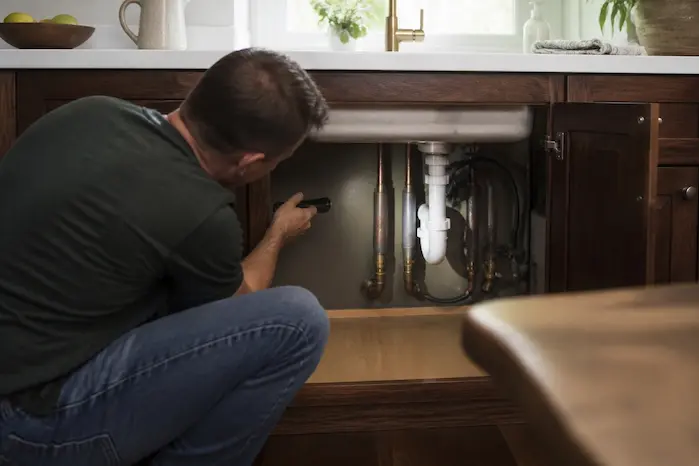
You do not need to re-plumb the house. Foam pipe sleeves from a hardware shop cost very little per length and cover the most exposed runs in an afternoon.
A few things separate insulation that helps from insulation that misleads.
Cover the pipe, not the fittings. Foam sleeves slide easily over straight runs. Elbows, tees and valves are harder, and they are often where freezes start. Use short offcuts, wrap them tightly, and accept that the joints will never look neat.
Do not compress the insulation. Foam works because of the air trapped inside it. Tape it firmly enough to stay on, not so tight that it flattens.
Seal the draft, not just the pipe. A beautifully insulated pipe in a howling draft will still freeze. Foam or silicone around the hole where the pipe passes through a wall does as much good as the sleeve. This is often the cheapest fix in the whole job.
Be careful with heat tape. Self-regulating electric heat cable can protect a genuinely exposed pipe, and it is a reasonable purchase for one bad run. But it needs a power supply, it must be installed to the manufacturer’s instructions, and it must never be wrapped over itself or covered with insulation that traps heat against the cable. If you are not confident, do not improvise.
Never box pipes in with furniture or boarding. People sometimes build a neat cover over pipes under a sink or along a garage wall. That looks tidy and makes the pipe colder by removing the warm air it was getting.
Your 24-hour cold snap checklist
When a hard freeze is forecast, work through this the day before. It takes about twenty minutes and covers almost everything that goes wrong.
- Disconnect garden hoses. A hose left connected traps water in the faucet and the pipe behind it. This is the single most common cause of a winter burst.
- Shut off and drain outdoor faucets. Close the indoor valve that serves them, then open the outdoor faucet to drain any remaining water.
- Close foundation vents and crawlspace openings. If your house has vents designed to keep the subfloor dry in summer, close them for the cold spell.
- Seal obvious drafts. Seal gaps around pipes entering the house, ill-fitting basement doors, and drafty attic hatches. Foam and draft excluder, not caulk.
- Open cabinet doors on exterior walls.
- Set the thermostat to at least 55°F and leave it there for the duration.
- Start the trickle on the most exposed faucet before bed.
- Find and photograph your main shutoff. Know exactly where it is and whether the valve turns freely before you need it at 3am.
- Fill a couple of water containers. If the supply does freeze or you shut it off, you will want drinking water without melting snow.
- Charge phones and power banks, and check that your flashlight works. A freeze often comes with an outage.
- Check on neighbors who are older, live alone, or are away. A five-minute conversation prevents a lot of damage.
Save this list to your phone. It is also worth reading alongside how to prepare your home for severe storms, because the two events often arrive together and share half the same tasks.
Leaving home in winter
Going away in January is when most avoidable bursts happen. A few habits make the difference.
Keep the heating on at 55°F for the whole trip. Do not switch it off to save money. If the house will be empty for weeks rather than days, consider draining the plumbing instead, and ask someone to check on the property.
Ask a neighbor to look in once or twice. Give them your number and show them where the main shutoff is. A burst pipe discovered on day one is a nuisance. A burst pipe discovered after two weeks is a rebuild.
If you are leaving during a forecast cold snap, delay the trip if you can. If you cannot, do the full checklist above before you go, and leave cabinet doors open.
One more: if your heating system is old or unreliable, do not leave the house unheated in a hard freeze and hope. Either have it serviced before you go, or drain the system.
If a pipe freezes: how to thaw it safely
You will usually notice a freeze before a burst. A faucet runs slowly or not at all. A toilet cistern does not refill. You may hear faint knocking or gurgling. Sometimes a section of pipe is visibly frosted.
If that happens, stay calm and follow these steps.
Leave the faucet open. Open the faucet the frozen pipe serves before you start. As the ice melts, water needs somewhere to go, and an open faucet also tells you when you have succeeded.
Find the freeze. Work backwards from the faucet. Feel along the pipe for the coldest section, or look for frost. Common spots are where the pipe meets an exterior wall, under a sink, or in a crawlspace.
Heat from the faucet end toward the freeze. Start near the open faucet and work along the pipe toward the blockage. This keeps melted water flowing out instead of getting trapped.
Use gentle heat. A hair dryer, an electric heat pad wrapped around the pipe, or a portable space heater placed a safe distance away. Keep any heater well clear of anything that can burn, and never leave it unattended.
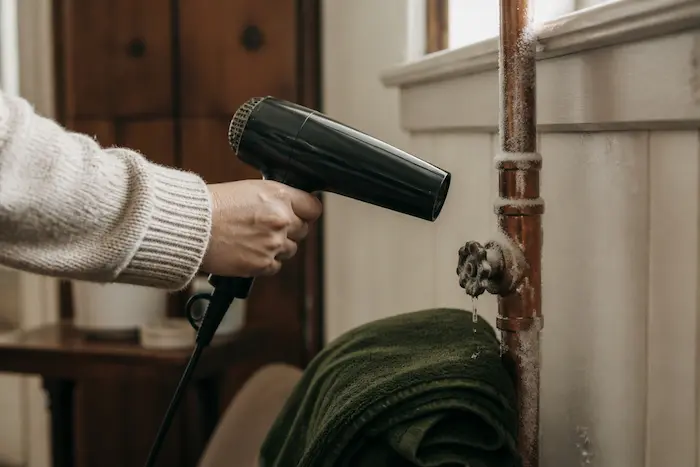
Never use an open flame. No blowtorch, no lighter, no charcoal. A blowtorch on a frozen pipe is a house fire waiting to happen, and it can also crack the pipe. This is the one rule worth repeating to anyone else in the house.
Never pour boiling water on a frozen pipe, especially outdoors or on a pipe you cannot see the full length of. Thermal shock can crack it, and the water refreezes.
Stop if you see a bulge or a split. If the pipe is deformed or visibly cracked, stop thawing and treat it as a burst. Thawing it will simply release the water.
Work slowly. A pipe frozen for hours can take an hour or more to clear. Rushing with a hotter heat source is how people turn a frozen pipe into a fire.
If you cannot find the freeze, or the pipe is inside a wall or under a floor, stop and call a plumber. Opening a wall is a job for someone who knows where the pipes run.
If a pipe bursts: the first ten minutes
A burst pipe is a water emergency. Order matters more than speed.
Shut off the main water supply. Turn the valve fully clockwise, or lift the lever if it is that type. If you cannot find it, or it will not turn, call a plumber immediately and tell them the water is running.
Turn off the electricity to wet areas. If water is anywhere near outlets, light fittings, or a breaker panel, switch off the affected circuit at the breaker box. Do not stand in water to do it.
Open the lowest faucets in the house to drain the system down and reduce the flow through the split.
Contain what you can. Use towels, buckets, and a washing-up bowl. Move furniture and anything electrical off the wet floor.
Photograph everything before you clear up. Take wide shots of the room, close-ups of the split, and photos of any damaged belongings. This is what an insurer will ask for.
Call your insurer’s emergency line if the damage is significant, and ask whether they have a preferred drying contractor. Many policies cover emergency make-safe work.
Then call a plumber. When you describe the problem, tell them the pipe material (copper, plastic, or older galvanised steel) and where the split is. That helps them bring the right fittings and gives you a more accurate quote.
Temporary repairs exist, including slip-on repair clamps and self-amalgamating faucet repair kits, and they can hold a pinhole leak until morning. They won’t fix a split pipe. Treat them as a way to stop the water, not to end the job.
If the water is off and the house is cold, you’re in an outage scenario. The guide to keeping your home warm during a winter power outage covers heating, and the power outage checklist covers the rest.
Renters, condos and radiator systems
If you rent, your responsibilities are narrower but still real.
You are usually responsible for reporting problems quickly and for not making them worse. Report a frozen or leaking pipe immediately in writing so you have a record. Keep the heating at a reasonable level as your lease requires. Don’t attempt repairs yourself, and don’t turn off the heating in freezing weather to save money if your lease says you must maintain it.
Know where your unit shutoff is, even if you never touch it. In a flat, it may be a valve in a utility cabinet, under the kitchen sink, or in a shared riser. Ask the building manager before winter, not during a leak.
In a condo, the strata or HOA documents define the boundary between your responsibility and the building’s. Water from your unit damaging the unit below is the classic dispute. Report promptly, document everything, and let your insurance handle the argument.
Radiator systems behave differently. Steam radiators knock and bang, and a knocking radiator is usually a pitch or valve issue rather than a freeze. A frozen condensate line on a high-efficiency boiler is more likely, and that is a heating engineer’s job. Do not drain a wet heating system yourself to prevent a freeze unless you know how to refill and bleed it.
After the thaw: what to check
Once temperatures rise, spend twenty minutes checking the things a freeze can quietly damage.
Look under sinks, in basements and around the boiler for damp patches or staining. Check ceilings below bathrooms and above garages. Run every faucet and watch the flow. Flush every toilet. Look at the boiler pressure gauge. Check outdoor faucets for splits, which often only show when you turn them on in spring.
If you find a slow leak or a damp patch, deal with it now. Small plumbing leaks in winter often become ceiling collapses in March.
Then note what froze and where. Next November, that list tells you exactly which pipe to insulate first.
Frequently asked questions
At what temperature do pipes freeze?
Water freezes at 32°F, but outdoor temperatures of 20°F or lower usually put an exterior wall pipe at risk, especially with wind. The pipe is colder than the room because it sits in the wall cavity.
Should I drip hot or cold water?
Cold. A cold trickle keeps water moving and costs less. If a line has frozen before, run both hot and cold slightly, because hot lines freeze too.
How fast can pipes freeze?
A short run in an unheated crawlspace, garage ceiling or exterior wall can freeze within a few hours of a hard freeze. That is why the checklist matters more than the forecast.
Will home insurance cover a burst pipe?
Usually yes for a sudden water leak, and often no for damage caused by long-term neglect or a leak the owner knew about. Photograph before you clear up and keep the plumber’s report.
Sources
- American Red Cross, Preventing and Thawing Frozen Pipes
- Ready.gov, Winter Weather
- US DOE, Consumer Guide to Air Sealing the Home
- Local utility cold-weather notices (20°F drip-faucet threshold) — no public link