
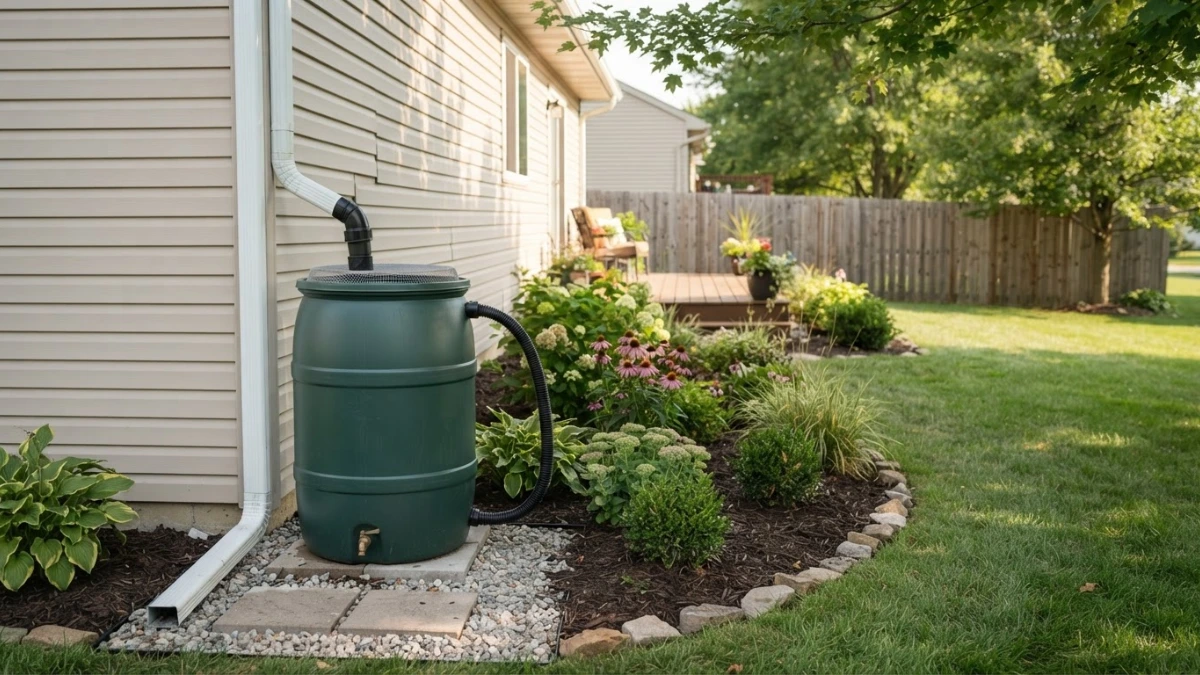
Collecting rainwater is a practical way to make your home garden more resource-efficient. Instead of letting all the rain on your roof flow into storm drains, you can capture some of it and use it to water plants during dry periods.
You don’t need a large property or a complicated water collection system to get started. For many households, a single rain barrel connected to a suitable roof downspout can provide a useful supplementary source of garden water.
However, collecting rainwater safely involves more than placing a container outdoors. You’ll need to consider the water source, how you’ll store it, which plants you’ll water, and whether local regulations allow your proposed setup.
This beginner’s guide explains how to collect rainwater for your garden, choose suitable equipment, install a basic system, and maintain it throughout the growing season.
1. What Is Rainwater Harvesting?
Rainwater harvesting is collecting and storing rainfall for later use.
In a typical residential system, rain falls onto a roof, flows through gutters and downspouts, and enters a storage container such as a rain barrel.
You can then use the stored water for appropriate outdoor purposes, including watering ornamental plants and landscaping.
A basic rainwater collection system usually consists of five components:
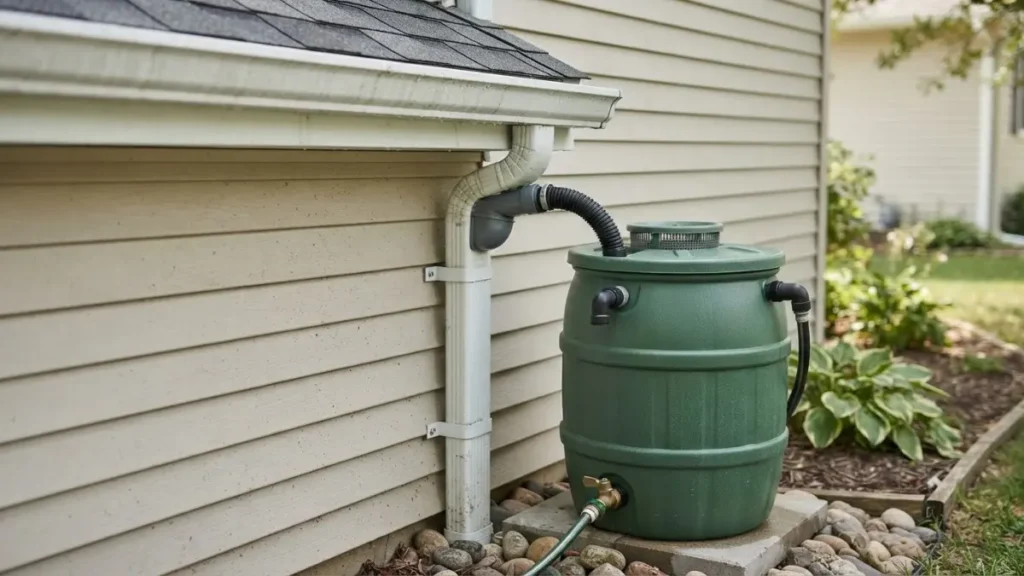
- Catchment surface: The roof or other suitable surface where rainfall collects.
- Gutters and downspouts: Channels that direct water toward the collection point.
- Debris screening: A screen or filter that keeps leaves and insects out.
- Storage container: A rain barrel or tank that holds collected water.
- Outlet and overflow: A tap or hose connection for using water and a safe route for excess water.
For beginners, a commercially manufactured rain barrel with a secure lid, screened inlet, and overflow connection is often the simplest option.
This guide focuses on collecting rainwater for non-drinking purposes. Do not assume roof runoff is safe to drink or use for cooking.
2. Why Collect Rainwater for Your Garden?
Rainwater harvesting offers several practical benefits, particularly for households interested in gardening and everyday self-sufficiency.
Reduce the use of treated tap water
Many households use municipal drinking water for outdoor irrigation.
Collecting rainwater allows you to replace some of that use with locally available rainfall.
The amount saved depends on your roof area, rainfall patterns, storage capacity, and garden watering needs.
Provide a supplementary watering source
A rain barrel can provide additional water between rainfall events.
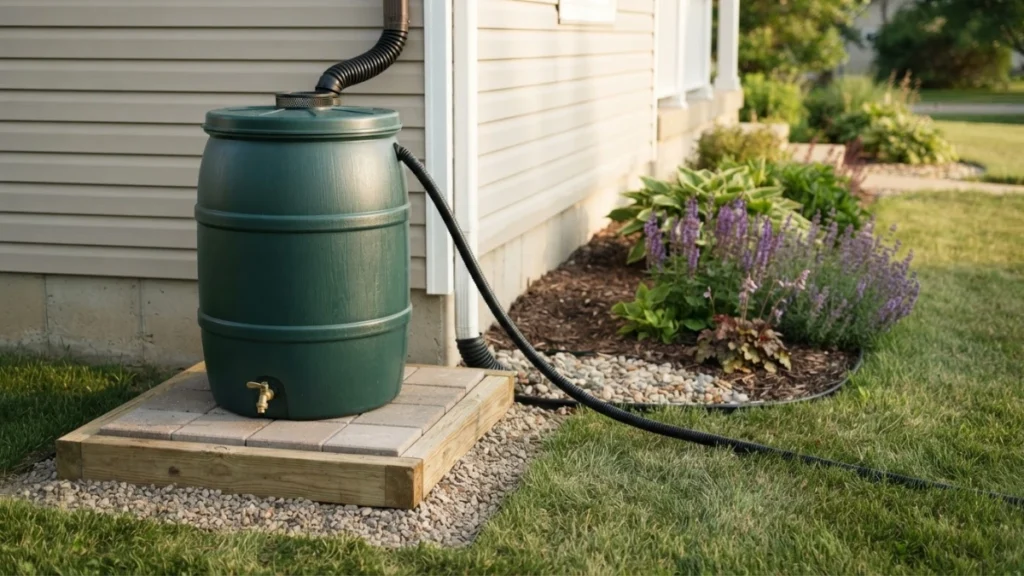
This is especially useful for ornamental gardens, flower beds, and landscaping.
However, one barrel may empty quickly during hot or dry weather, so treat rainwater harvesting as a supplement rather than a guaranteed year-round water supply.
Manage a small portion of roof runoff
Capturing rainfall can temporarily reduce the amount of water flowing directly from a downspout during a storm.
A small rain barrel has limited capacity, however, and should not replace proper property drainage.
Develop practical self-sufficiency skills
Rainwater collection connects naturally with other home gardening practices, including composting, mulching, and improving soil moisture retention.
Together, these methods can help households manage garden resources more efficiently.
Reference: EPA — Soak Up the Rain: Rain Barrels
If you’re developing a more resource-efficient backyard, our guide to starting a small backyard vegetable garden explains the basic steps involved in planning and maintaining a beginner-friendly growing space.
3. Check Local Rainwater Collection Rules Before Starting
Before purchasing a rain barrel, check the rules that apply to your property.
Rainwater harvesting regulations differ between US states, Canadian provinces, municipalities, and individual residential developments.
Some jurisdictions encourage residential rainwater collection, while others limit storage capacity, permitted uses, plumbing connections, or installation.
If you live in a rental property, condominium, or homeowners association community, additional restrictions may apply.
Check with your local government, water utility, or building authority before installing a system.
Pay particular attention to rules involving:
- Roof runoff collection.
- Storage containers and placement.
- Mosquito prevention.
- Overflow drainage.
- Connections to household plumbing.
- Irrigation of edible crops.
For a beginner’s garden system, keeping rainwater collection separate from household drinking-water plumbing is the simplest approach.
4. Choose the Right Rainwater Collection Method
Several rainwater collection methods are available, but not all suit beginners equally.
Rain barrel connected to a downspout
This is one of the most common residential approaches.
A rain barrel captures water from a roof gutter and stores it for later use.
Many household rain barrels hold approximately 40–60 gallons, although capacities vary.
A downspout diverter system can direct water into the barrel and, when installed correctly, return excess flow to the existing drainage route.
Larger rainwater storage tank
A larger tank can store more water for extended irrigation needs.
However, it requires more space, a suitable foundation, careful overflow planning, and potentially additional permits.
Small collection containers
A small container may capture limited rainfall for occasional use, but open buckets are generally a poor long-term solution because they can collect debris, attract mosquitoes, tip over, or present safety hazards.
For most beginners with a suitable downspout, a covered rain barrel is a better place to start.
5. How Much Rainwater Can You Collect?
The amount of rainwater you can collect depends mainly on your catchment surface size and rainfall.
In US customary units, a useful estimate is:
Gallons collected = roof catchment area (square feet) × rainfall (inches) × 0.623 × collection efficiency
The 0.623 factor converts 1 inch of rain over 1 square foot into about 0.623 gallons.
Collection efficiency accounts for losses caused by splashing, debris diversion, evaporation, and other factors.
Example: A small roof section
Suppose your rain barrel receives runoff from a 200-square-foot roof section.
If one inch of rain falls and you assume 80% collection efficiency:
200 × 1 × 0.623 × 0.80 = approximately 100 gallons.
That is more water than a typical 50-gallon barrel can hold.
This illustrates why a relatively small roof area can fill a rain barrel during a single storm.
Actual collection depends on rainfall intensity, drainage setup, and available storage capacity.
Remember: A full 50-gallon barrel contains roughly 417 pounds of water, excluding the barrel itself.
Always place it on a stable, level support designed to carry the full weight.
6. What You Need to Set Up a Basic Rain Barrel
A simple downspout-connected rain barrel system typically requires:
- A purpose-built rain barrel with a secure lid.
- A compatible downspout diverter or inlet assembly.
- A debris screen.
- A stable, level base.
- An accessible outlet tap or spigot.
- An overflow arrangement.
- Manufacturer-recommended fittings and tools.
Some rain barrels include most of these components.
Choose equipment designed for outdoor water storage rather than repurposing a container that previously held chemicals or other hazardous substances.
If you use a recycled container, verify it is suitable for the intended purpose and can be safely secured against accidental access.
Reference: Virginia Tech Extension — Rain Barrels
7. How to Install a Rain Barrel: Step by Step
A basic rain barrel installation is manageable for many homeowners, although the exact procedure depends on the product and existing drainage system.
Step 1: Select a suitable downspout
Choose a downspout serving a suitable roof section near the garden.
Avoid collecting runoff from roofs with known contamination concerns, such as deteriorating lead-containing materials or surfaces treated with chemicals that may wash into the water.
Also consider nearby trees, roof debris, and how easy it will be to maintain.
Step 2: Prepare a stable base
The barrel must sit on a firm, level surface that can support its full weight.
Follow the manufacturer’s foundation and elevation recommendations.
If using a stand, select one rated for the loaded barrel rather than improvising an unstable platform.
Step 3: Install the downspout connection
Follow the rain barrel or diverter manufacturer’s instructions.
Some systems require cutting a section of the downspout and installing a diverter fitting.
Others use a direct inlet connection.
Make sure the connection does not create leaks against the building or interfere with normal drainage.
Step 4: Secure the inlet and lid
Keep the barrel covered.
Install fine screening at openings to keep insects, leaves, and debris out.
The lid should resist accidental opening and prevent children or animals from accessing the water.
Step 5: Arrange safe overflow drainage
Once the barrel is full, additional rainfall must flow away safely.
Use a properly sized overflow connection or compatible diverter arrangement.
Direct overflow away from foundations, neighboring properties, walkways, and erosion-prone areas.
Do not block the original drainage system.
Step 6: Test the system
After installation, inspect the system during rainfall or test it according to the manufacturer’s instructions.
Check for leaks, unstable supports, blocked screens, and improper overflow.
Make adjustments before relying on the system for routine garden watering.
Reference: University of Illinois Extension — Harvesting Rainwater
8. How to Store Collected Rainwater Safely
Stored rainwater requires regular maintenance.
Unlike treated municipal water, roof runoff can contain microorganisms, dirt, bird droppings, roofing residues, and other contaminants.
Use a closed, opaque container to limit sunlight exposure, algae growth, and insect entry.
Keep the barrel protected against tipping or accidental access.
Regularly inspect the inlet screen, lid, outlet, and overflow.
Prevent mosquito breeding
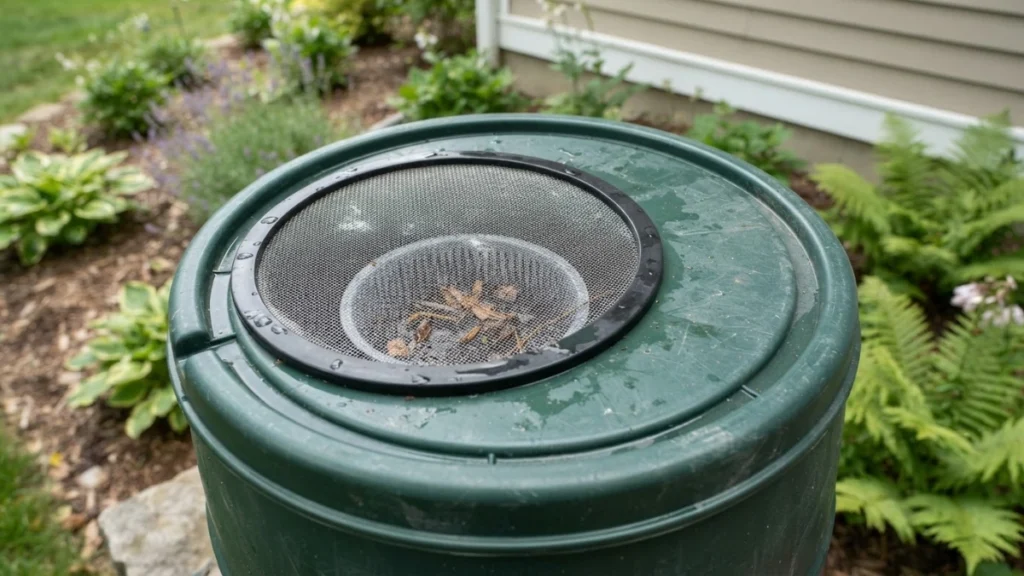
Mosquitoes can breed in standing water if they can access it.
Use tightly fitted lids and fine screens on all openings.
Repair damaged screening promptly.
If mosquitoes remain a concern, follow local mosquito-control guidance about approved treatments for non-potable rainwater storage.
Never add household chemicals or pesticides without confirming that they are appropriate for the system and intended water use.
Avoid long periods of neglected storage
Rain barrels work best when you use and maintain them regularly.
Remove accumulated debris and clean the barrel according to manufacturer guidance.
Drain and winterize the system before freezing weather when required by the manufacturer or local climate conditions.
Reference: CDC — Collecting Rainwater and Your Health
9. Can You Use Rain Barrel Water on Vegetable Gardens?
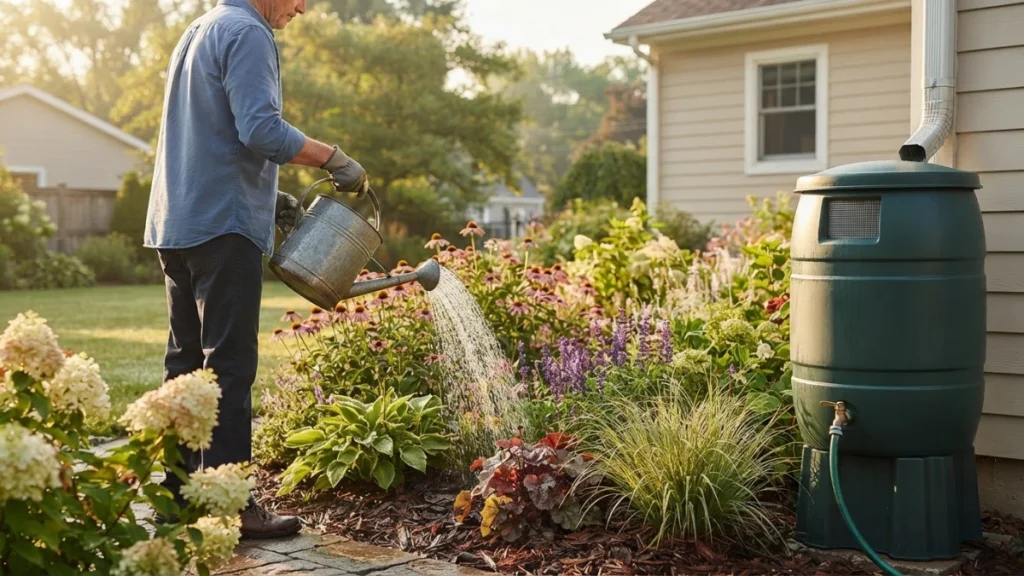
This distinction matters for households growing food.
Roof-collected rainwater may contain contaminants from roofing materials, atmospheric deposition, bird droppings, and other sources.
Because untreated runoff quality is uncertain, don’t automatically consider it safe for edible crops.
For beginners, the most cautious approach is to use untreated roof-collected rainwater on ornamental plants and non-edible landscaping.
If you plan to irrigate vegetables or herbs, consult your local agricultural extension service or public health authority for guidance on appropriate collection surfaces, treatment, testing, and irrigation practices.
Avoid spraying untreated roof runoff directly onto edible leaves, fruits, or vegetables.
Water quality requirements vary by crop, irrigation method, and local guidance.
Do not use untreated rain barrel water for drinking, cooking, washing produce, or other household uses requiring potable water.
Rainwater harvesting for garden irrigation is different from storing safe drinking water. For household preparedness, see our guide on how much emergency water to store at home.
10. Make Your Stored Rainwater Last Longer
Rain barrels have limited capacity, so efficient watering practices matter.
Water plants at suitable times
Watering early in the morning reduces evaporation compared with watering during the hottest part of the day.
Apply water near plant roots
For non-edible plants, water the soil directly to reduce losses from overspray.
Use mulch
Mulch can help reduce soil moisture evaporation and moderate soil temperature.
Improve soil with compost
Organic matter can improve soil structure and moisture management.
Well-maintained garden soil can use available irrigation water more effectively.
Group plants with similar watering needs
Group plants with similar moisture needs to water more efficiently.
These methods can reduce unnecessary water use, whether you rely on stored rainwater or another appropriate irrigation source.
Alongside efficient watering, composting at home for beginners is another practical way to improve garden soil and make better use of household organic waste.
11. Common Rainwater Harvesting Mistakes to Avoid
Using an uncovered container: Open containers can collect debris and create mosquito or safety problems.
Ignoring overflow: Excess water may damage foundations or create erosion if drainage is poorly planned.
Installing an unstable barrel: A full rain barrel is extremely heavy and must be properly supported.
Assuming rainwater is clean: Roof runoff can contain biological and chemical contaminants.
Connecting directly to household plumbing: Cross-connections can contaminate potable water systems and may violate local codes.
Forgetting winter maintenance: Freezing water can damage barrels, fittings, and connected pipes.
Choosing a barrel based only on size: A larger container isn’t always better if you can’t install or maintain it safely.
12. Frequently Asked Questions
Is collecting rainwater legal in the United States?
Rainwater collection is permitted in many locations, but regulations and requirements vary. Check applicable state and local rules before installing a system.
How big should my first rain barrel be?
A 40–60-gallon barrel is a common starting point for residential garden use, as long as you have a suitable location and stable support.
Can I drink rainwater collected from my roof?
Do not assume untreated roof-collected rainwater is safe to drink. Potable use requires appropriate treatment, testing, and compliance with applicable health and plumbing requirements.
How quickly can a rain barrel fill?
A modest roof section can generate enough runoff to fill a barrel during a single rainfall event. Actual results depend on catchment area, rainfall, losses, and storage capacity.
Can I use rainwater on vegetables?
Untreated roof runoff may contain contaminants. Consult local agricultural extension or public health guidance before using it on edible crops. Using it for ornamental landscaping is a safer option for beginners.
Do rain barrels attract mosquitoes?
Poorly maintained or uncovered containers can become mosquito breeding sites. Secure lids, fine screens, and regular inspection help reduce this risk.
Should I empty my rain barrel during winter?
In freezing climates, you may need to drain, disconnect, and store or winterize many rain barrels. Follow the manufacturer’s instructions and local recommendations.
Conclusion
Collecting rainwater for your garden is a practical way to supplement outdoor watering and develop a useful household self-sufficiency skill.
For many beginners, a properly installed rain barrel connected to a suitable roof downspout is a manageable starting point.
Key considerations include safe placement, suitable collection surfaces, secure storage, effective overflow drainage, and regular maintenance.
Start with a simple system, follow local rules, and use the collected water only for appropriate purposes.
As you gain experience, you can evaluate whether additional storage capacity or more advanced rainwater harvesting methods would benefit your garden.