

Severe storms can arrive quickly, bringing damaging winds, heavy rain, lightning, hail, and sometimes tornadoes or flash flooding. Even a relatively short storm can damage a roof, bring down trees, interrupt electricity, or make roads unsafe.
The good news is that preparing your home does not always require expensive equipment or major renovations. Many useful precautions involve ordinary household maintenance, organizing emergency supplies, and knowing where your family should shelter.
If you are wondering how to prepare your home for severe storms, this beginner-friendly checklist explains what to do well before bad weather develops, when a storm is approaching, during dangerous conditions, and after the weather clears.
1. Understand the Severe Storm Risks in Your Area
Not every home faces the same weather hazards.
A family living in the American Midwest may need to prepare for tornadoes and large hail. Coastal households may face tropical storms and hurricanes, while other communities experience severe thunderstorms, damaging winds, or flash floods.
Start by identifying the weather events most likely to affect your neighborhood.
Check:
- Historical severe weather events in your area.
- Local flood-risk maps and evacuation zones.
- Whether your community has tornado shelters.
- Local emergency alert systems.
- Seasonal risks, including thunderstorms, hurricanes, and winter storms.
In the United States, the National Weather Service provides weather alerts and preparedness information at https://www.weather.gov/.
Canadian residents can consult Environment and Climate Change Canada at https://weather.gc.ca/ and their provincial or local emergency management authorities.
Storm prep and cold prep overlap more than most people expect, and our guide on keeping pipes from freezing in a cold snap covers the plumbing half of the same job
Know the Difference Between a Watch and a Warning
A watch generally means conditions are favorable for a particular severe weather hazard. Review your plans and be ready to act.
A warning means the hazard is occurring, imminent, or otherwise meets the warning criteria. Follow the specific protective instructions immediately.
Don’t wait until you can see dangerous weather outside to respond to an official warning.
2. Inspect Your Roof, Gutters, and Exterior Walls

Your roof is one of the home’s first lines of protection against wind and rain.
Loose shingles, damaged flashing, blocked gutters, and poorly secured exterior fixtures can increase the likelihood of storm damage.
Well before storm season:
- Look for missing or visibly damaged roof shingles from a safe position on the ground.
- Arrange repairs for roof leaks or damaged flashing.
- Clear gutters and downspouts when it is safe to do so.
- Check that downspouts direct water away from the foundation.
- Inspect exterior doors, siding, and garage doors for visible damage.
- Ask a qualified contractor to assess suspected structural problems.
Avoid climbing onto the roof or using ladders as storms approach.
If you live in an area regularly affected by hurricanes or strong winds, ask a qualified professional whether additional roof connections, storm shutters, or garage-door reinforcement would be appropriate.
Beginner tip: Take photographs of your home’s exterior during normal weather. They may help document its condition if you later need to make an insurance claim.
3. Secure Outdoor Furniture and Loose Objects
High winds can turn ordinary outdoor objects into dangerous flying debris.
Patio chairs, umbrellas, gardening tools, trash bins, flowerpots, and lightweight decorations may blow across a yard or hit windows.
Before severe weather arrives:
- Bring lightweight furniture and decorations indoors.
- Store gardening tools in a shed or garage.
- Secure trash and recycling containers.
- Retract or remove patio umbrellas and awnings.
- Move lightweight planters to a protected location.
- Secure other outdoor equipment according to the manufacturer’s instructions.
If you have a balcony, check for loose items that could fall or be blown away.
Do not go outside to retrieve belongings once dangerous winds, lightning, or other immediate hazards have developed.
4. Check Windows, Doors, and Garage Doors
Windows and doors deserve special attention because damage can let wind-driven rain and debris into your home.
Inspect weatherstripping, door frames, window seals, and garage-door components during ordinary maintenance.
Replace damaged seals and repair doors or windows that do not close properly.
In hurricane-prone areas, properly rated storm shutters or impact-resistant protection may provide additional protection when installed according to local requirements.
Ordinary tape applied across windows does not make them safe from flying debris.
Important: Close windows before a storm. Never open them to supposedly equalize pressure during a tornado. If a tornado warning is issued, move immediately to your designated shelter.
5. Trim Trees and Reduce Falling-Branch Hazards
Trees provide shade and improve a property’s appearance, but dead or weakened branches can become dangerous in strong winds.
Inspect trees near your home for obvious warning signs such as broken branches, leaning trunks, or significant decay.
Consider these precautions:
- Arrange professional removal of dangerous dead branches.
- Keep branches from interfering with roofs and other structures.
- Consult a qualified arborist about large trees showing signs of instability.
- Keep vegetation away from overhead utility lines by contacting the utility company rather than attempting the work yourself.
Never attempt to cut branches near electrical wires.
Complete tree maintenance well before storms are forecast, not during severe weather.
6. Prepare for Heavy Rain and Possible Flooding
Heavy rainfall can cause water to accumulate around foundations, enter basements, or overwhelm drainage systems.
Even households outside mapped flood zones may experience localized drainage problems.
Before storm season:
- Clear leaves and debris from accessible ground-level drains.
- Check whether water pools near the foundation.
- Repair known basement leaks.
- Test an existing sump pump according to the manufacturer’s instructions.
- Consider a battery backup for a sump pump if power interruptions are common.
- Move important documents and vulnerable possessions above likely flood levels.
If your property has flooded repeatedly, consult a qualified drainage professional.
Do not enter a flooded basement if electrical equipment may be submerged or energized.
If local authorities issue an evacuation order, leave as directed. Do not remain in a dangerous area simply because your home has emergency supplies.
7. Prepare for Storm-Related Power Outages
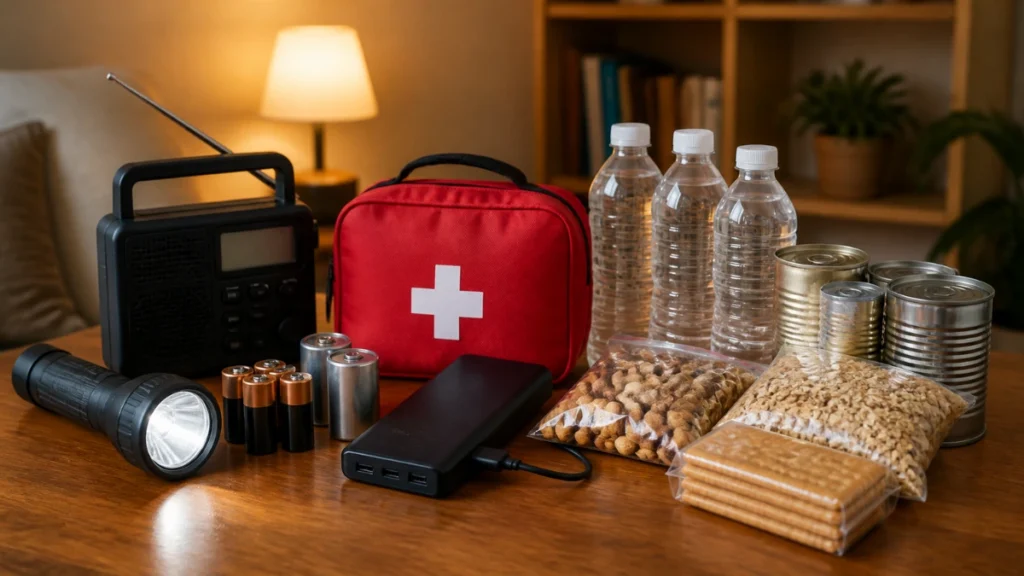
Strong winds, lightning, falling trees, and damaged electrical equipment can interrupt electricity.
Prepare essential items before the weather deteriorates.
Useful supplies include:
- Battery-powered flashlights.
- Spare batteries.
- Fully charged power banks.
- A battery-powered or hand-crank radio.
- Necessary medications.
- A basic first-aid kit.
- Drinking water and shelf-stable food.
- Essential baby, pet, or accessibility supplies.
Keep these items in an accessible location everyone in the household knows.
For a broader review of household essentials, see our Emergency Supplies Checklist: What Every Home Should Have before the next storm season begins.
Charge phones and other essential devices when severe weather is forecast.
If you use a portable generator, operate it outdoors, well away from windows, doors, and vents, following manufacturer and official carbon monoxide safety guidance. Never operate a generator inside a house, garage, or enclosed porch.
For more detailed planning, see our guide, How to Prepare for a Power Outage at Home: A Beginner’s Guide.
8. Identify the Safest Place to Shelter
Your household should know where to go before a severe storm warning arrives.
For damaging thunderstorm winds and large hail, a sturdy building away from windows provides important protection.
If a tornado threatens, the preferred shelter is a properly designed storm shelter or safe room, or a basement. Otherwise, choose a small interior room on the lowest floor of a sturdy building, away from windows.
A bathroom, closet, or interior hallway may be suitable depending on the building.
Manufactured or mobile homes are not safe tornado shelters, even when tied down. Residents should identify a nearby sturdy shelter and plan how to reach it before dangerous conditions arrive.
For flooding, the safest response may be very different. Follow local flood and evacuation instructions rather than automatically moving to a basement or another low area.
Keep shoes, a flashlight, and a way to receive emergency alerts near your designated shelter.

9. Make a Family Storm Safety Plan
A storm preparation checklist works best when every household member understands what to do.
Discuss these questions:
- Who will monitor weather alerts?
- Where should everyone shelter?
- How will family members contact each other if mobile networks are disrupted?
- What should children do if adults are away?
- How will older relatives or family members with disabilities receive assistance?
- What arrangements are needed for pets?
- Where will everyone go if evacuation becomes necessary?
Choose an out-of-area emergency contact and keep important telephone numbers accessible offline.
Practice moving to your shelter location so that family members are familiar with the routine.
For detailed instructions, read our How to Make a Family Emergency Communication Plan: A Step-by-Step Guide.
10. What to Do When a Severe Storm Is Approaching
Once a storm is forecast, focus on actions you can complete safely.
Before dangerous weather reaches your area
- Check official weather alerts and local emergency instructions.
- Charge phones and essential battery-powered devices.
- Secure loose outdoor belongings while conditions are still safe.
- Close and secure windows and exterior doors.
- Confirm that your emergency supplies are accessible.
- Keep pets indoors or prepare safe shelter arrangements.
- Review your household shelter and evacuation plans.
Do not attempt last-minute roof repairs, tree trimming, or outdoor work as dangerous weather approaches.
If authorities recommend or order evacuation, follow their instructions promptly.
11. What to Do During a Severe Storm
When the storm arrives, protecting people takes priority over protecting property.
Stay inside a sturdy building and away from windows. Continue monitoring official weather warnings.
During lightning, avoid contact with plumbing, running water, corded telephones, and corded electrical equipment.
If a tornado warning is issued, move immediately to your designated tornado shelter.
If flooding threatens, move away from floodwater and follow evacuation or higher-ground instructions. Never walk or drive through flooded roads.
Do not go outside to inspect damage while severe weather continues.
Wait for official information indicating that the immediate danger has passed.
12. What to Do After the Storm
The end of heavy rain or strong winds does not necessarily mean every danger has disappeared.
Downed power lines, unstable trees, damaged roofs, broken glass, and floodwater can remain hazardous.
Once authorities indicate that it is safe:
- Check household members for injuries.
- Avoid fallen electrical wires and report them to the utility company.
- Stay away from visibly damaged or unstable structures.
- Photograph damage from a safe location.
- Contact your insurance provider if necessary.
- Arrange qualified inspections and repairs.
- Replace or replenish emergency supplies used during the storm.
Do not enter floodwater that may contain electrical hazards, sewage, or sharp debris.
If you smell gas or suspect a gas leak, leave the area and contact the appropriate emergency service or gas utility from a safe location.
Avoid unnecessary travel until roads have been assessed and reopened.
If your storm plan includes a generator, the placement and connection details in our generator safety guide are the part most people get wrong.
Severe Storm Preparation Checklist for Homeowners and Renters
Use this checklist during routine storm-season preparation.
Well Before Storm Season
- Identify the main severe weather hazards in your area.
- Sign up for official emergency alerts.
- Inspect roofs, windows, doors, and drainage.
- Arrange professional tree maintenance if needed.
- Identify safe shelter and evacuation locations.
- Review home or renters insurance coverage.
- Organize emergency supplies.
- Prepare a family communication plan.
When a Storm Is Forecast
- Check updated weather warnings.
- Charge essential devices.
- Secure outdoor furniture and loose objects.
- Bring pets indoors.
- Close windows and doors.
- Check emergency lighting and supplies.
- Follow evacuation instructions when applicable.
After the Storm
- Confirm that everyone is safe.
- Avoid electrical and structural hazards.
- Check official local safety updates.
- Document property damage safely.
- Arrange necessary repairs.
- Replenish used emergency supplies.
Frequently Asked Questions
What should you do first to prepare for a severe storm?
Identify your local weather risks, sign up for emergency alerts, and choose a safe shelter location. These steps help your household respond quickly when dangerous conditions develop.
How can I protect my windows during severe storms?
Inspect and repair damaged windows and seals before storm season. In high-wind regions, consider properly rated storm shutters or other professionally recommended protection. During severe weather, stay away from windows.
What should I keep in a storm emergency kit?
Keep flashlights, batteries, a radio, first-aid supplies, necessary medications, drinking water, nonperishable food, and essential personal items. Adapt the kit to your household’s needs and local hazards.
Is a basement always the safest place during a storm?
No. A basement is often a good shelter during a tornado, but it can be dangerous during flooding. The correct shelter depends on the specific weather hazard and official instructions.
How early should I prepare my home for severe storms?
Complete inspections, maintenance, and household planning well before your local storm season. When a storm is forecast, secure loose belongings, check alerts, and prepare to shelter or evacuate safely.
Final Thoughts
Preparing your home for severe storms isn’t about predicting every possible emergency. It is about taking practical precautions that reduce avoidable risks and help your household respond confidently.
Start with the basics: understand local weather hazards, maintain your property, secure outdoor objects, prepare emergency supplies, and establish a safe shelter plan.
A few small improvements made during ordinary weather can make a meaningful difference when severe conditions arrive.
This article provides general educational guidance. Always follow current instructions from local emergency management authorities and qualified safety professionals.